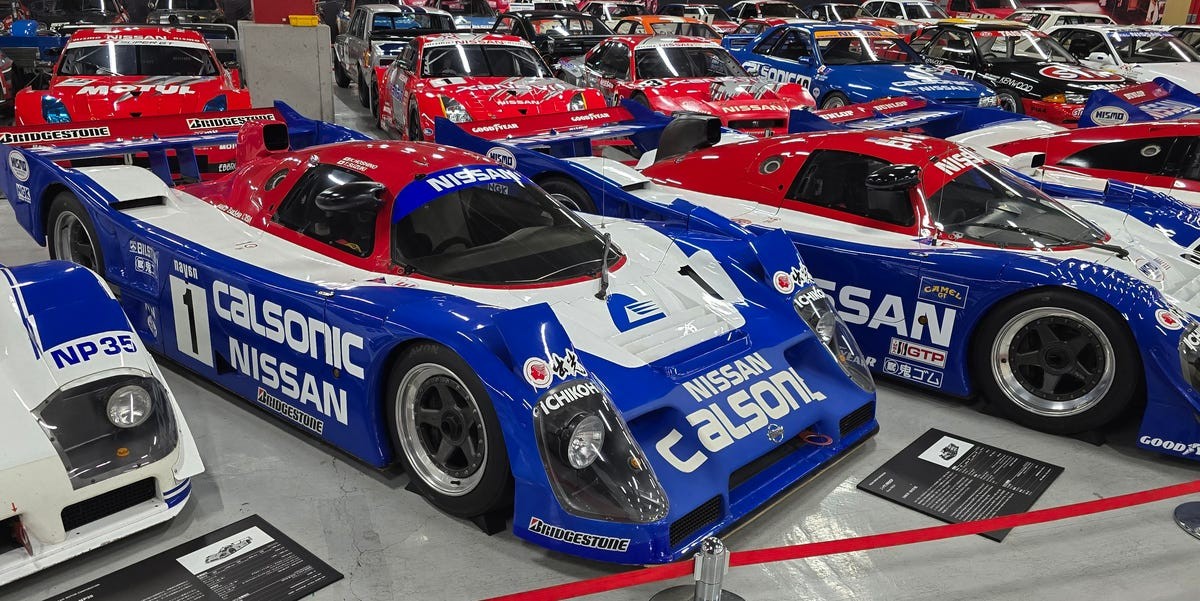
The Nissan Heritage Collection in Zama, Japan, is more than just a museum; it is a physical rebuttal to the idea that history repeats itself. Inside its climate-controlled halls, roughly 300 vehicles stand as testament to an era of automotive engineering that may never be replicated. From the raw mechanical brutality of the Nissan R92CP race car to the iconic status of the original 1969 Skyline GT-R, these machines represent a pinnacle of design and performance that feels distinct from modern automotive trends.
A Living History of Innovation
Walking through the collection is an exercise in nostalgia and awe. The facility houses nearly every significant model produced under the Prince, Datsun, and Nissan banners since 1933. These are not merely static displays; they are artifacts that have transitioned from magazine spreads and television broadcasts into tangible reality.
The layout itself tells a story of evolution. Brightly painted Japanese Grand Touring Car Championship racers sit adjacent to the road-going concepts that inspired them. Behind the pristine show cars, rally vehicles bear the authentic scars of competition, their battered bodies speaking volumes about their durability and the intensity of their past lives. For enthusiasts, the sheer density of legendary machinery makes choosing a favorite nearly impossible—yet also irresistible.
The Crown Jewel: Nissan Z31 (300ZX)
Among the hundreds of vehicles, one stands out as the undisputed champion of the collection: the Nissan Z31, known in the United States as the 300ZX. While automotive tastes vary, the Z31’s influence on sports car design and its engineering sophistication secure its status as a global icon.
This particular example highlights the complexity and variety available to Japanese buyers during that era. Unlike the U.S. market, which primarily received V6-powered variants, the domestic Japanese market offered a diverse range of powertrains, showcasing Nissan’s willingness to experiment with different engine architectures.
Technical Specifications
- Engine: Turbocharged SOHC 2.0-liter V-6 (VG20ET)
- Horsepower: 168 hp @ 6,000 rpm
- Torque: 159 lb-ft @ 3,600 rpm
- Transmission: Five-speed manual
Why the Z31 Matters
The Z31 was not just about speed; it was a technological showcase for its time. Beyond its striking aesthetics—featuring pop-up headlights and a futuristic digital gauge cluster—it introduced advanced driver-assist features that were decades ahead of their time.
Notable Feature: The “Bitchin’ Betty” voice-warning system. This early form of active safety technology would verbally alert drivers if they left their headlights on, exited with a door ajar, or drove with the parking brake engaged.
A Legacy of Distinction
The Nissan Heritage Collection serves as a critical archive of automotive history. It preserves not just the metal and rubber of these vehicles, but the engineering philosophies that defined an era. In an age where electric vehicles and autonomous driving are reshaping the industry, these internal combustion engines and manual transmissions remind us of the tactile, mechanical connection between driver and machine.
Conclusion:
The Nissan Heritage Collection is a vital preservation of automotive culture, offering a tangible link to the past that modern manufacturing can no longer replicate. It stands as a monument to innovation, proving that while technology advances, the soul of a great car remains timeless.