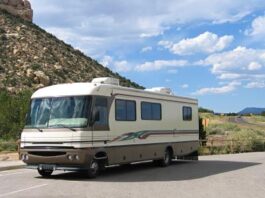
There’s a special kind of fury that only happens when you’re stuck behind a huge camper on a two-lane mountain pass. You creep forward slowly, watching the odometer tick off the kilometers in a vacuum, waiting for the driver in front of you to exit, which never comes. The posted speed limit is probably double the current one. They look out, make sure the lane is clear and pass. Simply. You return to the queue. They are back on schedule.
Now flip the script.
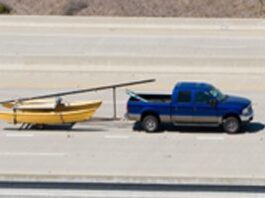
You are now a lumbering vehicle. You are driving a pick-up truck with a camper trailer attached to it. This trailer is several feet longer than your tow rig. You are heading to the lake house for a long weekend of boating and camping. A farmer with a slow-moving trailer full of hay has just pulled onto the road ahead. Your speed will decrease. Your patience is running out. But you can’t handle this situation the same way you would with a fancy sedan. Overtaking while towing is a completely different matter. In many cases this is not an option. It’s not a sure thing.
The Physics of the Long Tail
When you add a trailer to a vehicle, you change the center of gravity. You increase the surface area that catches the wind. You extend the wheelbase. The car does not respond the same way. It pushes differently. It moves differently.
Overtaking requires acceleration. It requires space. It takes time. All of these variables are compromised when towing.
The first problem is visibility. Even if you look around the side of your camper, your view of oncoming traffic is severely limited. On an winding road, you cannot see far enough ahead to judge the speed of an approaching car. You drive blind for the critical seconds.
Second is power. Most standard pickup trucks are not designed for high-speed passing with heavy loads. The engine is straining. The transmission downshifts repeatedly. You may be stuck in a gear that cannot provide the speed needed to pass a slower vehicle before the oncoming car appears.
The third is stability. Sudden lane changes while towing can cause the trailer to sway. The swing starts small. Then it grows. Then it becomes a jackknife or a rollover. When the trailer is attached, you can’t risk a sharp steering input.
When passing is impossible
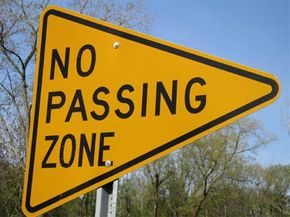
There are scenarios where overtaking is simply not possible. Imagine a narrow, two-lane country road without a shoulder. Imagine a hill that crests just ahead, hiding oncoming traffic. Imagine a curve that limits visibility to less than 100 yards.
In these cases, the only safe course of action is to slow down. Wait. Let the farmer pass. It’s frustrating. You want to get to the lake. You want to start the weekend. But the price of a mistake is too high.
Assessing the Situation
Before even considering a pass, you need to answer several questions:
- Is the road straight and flat?
- Is there sufficient visibility at least a mile ahead?
- Is there a passing lane or a wide shoulder?
- Do you have enough power to accelerate quickly without having to downshift several times?
- Does the vehicle in front move predictably?
If the answer to any of these questions is “no”, then do not pass.
The mechanics of a secure pass
When conditions are ideal, the process is still methodical.
- Check your mirrors. Make sure no one is trying to pass you.
- Signal early. Let the driver ahead know your intentions.
- Move out slowly. Do not jerk the wheel. Ease into the opposing lane.
- Accelerate steadily. Use a lower gear if necessary to maintain power.
- Stay visible. Keep the slower vehicle in view. Do not race past it blindly.
- Gradually return. When you are far enough away from the vehicle, signal and rejoin. Do not cut in front. Leave room.
Hidden dangers
Even with perfect execution
Why passing while towing is a high-stakes maneuver
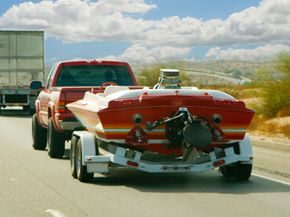
You’re hauling a heavy load, the road ahead is clear for a split second, and that slow-moving construction vehicle or hay-laden trailer seems like an easy target. The impulse to pass is real. It’s human nature. But before you touch the turn signal, you need to acknowledge a hard truth: how to pass safely while towing is a completely different skill set than passing an empty sedan.
Good judgment isn’t just a nice-to-have here; it’s the only thing standing between you and a jackknife disaster. The variables are endless. Rain slicks the asphalt. Sun glare blinds you from the side. Crosswinds buffet the side of your trailer. But even in perfect conditions, the physics of pulling weight change the game. You need more space. You need more time. You need to be smarter.
The mechanics of a safe overtake
Passing while towing demands more from your muscles and your vehicle’s drivetrain. It’s not just about pressing the gas. Here is the operational reality of executing a pass without losing control.
Signal with intent
Don’t wait until you’re already moving over. Signal early. This isn’t just about legality; it’s about communication. You’re telling the traffic around you that you’re about to occupy their space. Ideally, they’ll give you the room. In reality, you can’t rely on it, but signaling early gives you the best chance of them reacting before you commit.
Stick to level ground
Never attempt a pass on an incline. Never attempt a pass on a steep descent. This is a hard rule.
When you’re climbing, your tow vehicle has to work twice as hard to overcome gravity plus the trailer’s inertia. If you’re stuck beside a slow truck on a hill, you’re stranded. You can’t accelerate out of it fast enough. On a downhill, gravity does the work for you, but that speed builds up dangerously fast. You lose control of the gap between you and the vehicle you’re passing. Only pass on flat, level ground where you have a clear view of the road ahead and consistent acceleration capabilities.
Trust your mirrors, not just your eyes
Looking forward is obvious. Looking back is critical. Before you pull out into the passing lane, check your mirrors. Is someone trying to squeeze past you on your right? They might. And if you drift over, you’ll be in a collision.
Your mirrors are also your guide for when to get back in line. This leads directly into the next point.
Smooth inputs only
The steering wheel is not a joystick. Do not make abrupt movements. Ease out. Ease in.
Rapid steering inputs are the primary cause of trailer sway. If you jerk the wheel, the trailer reacts, often violently. It doesn’t just wobble; it can push you into a spin. Keep your hands firm. Keep your movements gradual. If you’re passing, treat the vehicle like it’s made of glass.
Recovering from trailer sway
Sway is the nightmare scenario. It can be triggered by high winds, a sudden steering correction at speed, or even the air displacement from another vehicle passing you. It’s scary. It’s rarely easy to fix.
If you feel the trailer start to fishtail, your instinct will be to hit the brakes. Do not do that. Braking magnifies the sway. It makes the back end swing harder.
Instead, take your foot off the accelerator. Let the vehicle slow down naturally. Keep both hands on the wheel. Steer straight. Allow the physics to settle. If the sway is extreme, engage the manual trailer brake controller in your cab. This applies the trailer’s brakes independently, helping to straighten the rig. Do not use the tow vehicle’s service brakes to correct sway. You will only make it worse.
The length trap
It sounds simple, but it’s where most accidents happen. Drivers forget the trailer is there. They finish passing the slower vehicle and begin to merge back into the lane too soon. They don’t account for the extra length of the trailer behind them. They clip the bumper of the vehicle they just passed.
Use your mirrors. Wait until you can see the entire vehicle you passed in your side mirror, plus a healthy buffer of road. Then merge. Give yourself the space.
Staying alert on the road
This is the baseline. Stay aware. Know what’s happening in every direction. Use good judgment. If the pass doesn’t look clean, don’t take it. There’s no prize for being first.
The road is unpredictable. Your trailer makes it less predictable. Respect that. Drive accordingly.
For deeper dives into the mechanics of towing, check the resources below.
More on towing and vehicle dynamics
Related Articles
- How Horsepower Works
- What does it mean to call a pickup truck a ‘half-ton truck’?
- How Force, Power, Torque and Energy Work
- Who is looking to reinvent the 18-wheeler?
- How Car Steering Works
- How Fear Works
- How does a car’s rearview mirror work when it’s in the glare-resistant setting?
External Resources
- RVbasics
- Auto Zone – Trailer Towing
- RV Central
- RV Towing Tips
Sources
- Auto Zone. “Trailer Towing.” (Sept. 19, 2008) http://www.procarcare.com/icarumba/resourcecenter/encyclopedia/icar_resourcecenter_ encyclopedia_towing2.asp
- Ingle, W.H. “Trailer Towing Tips: Towing Your New Trailer.” MotorPoint. (Sept. 19, 2008) http://www.motorpoint.com.au/trailer-usage.asp
- National Highway Traffic Safety Administration. “Towing a Trailer: Being Equipped for Safety.” Sept. 17, 2002. (Sept. 19, 2008) http://www.escapees.com/edocs/Towing.pdf
- RV Basics. “RV Fifth Wheel & Travel Trailer Towing Safety Tips.” (Sept. 19, 2008) http://rvbasics.com/techtips/travel-trailer-towing-safety-tips.html