Jeep calls it the “freedom of choice.” It sounds poetic, but it mostly just means they slapped the Avenger onto four different mechanical skeletons. You get manual petrol, an automatic mild hybrid, a four-wheel-drive plug-in hybrid, or a full electric. Same shell. Very different souls.
Skin Deep
Walk past a row of them at the dealer. Do you see the difference? Probably not.
The e-Hybrid looks identical to the EV. Just a green ‘e’ badge. The manual petrol looks even more naked, plain as day at the rear, but it keeps the character. It’s fine.
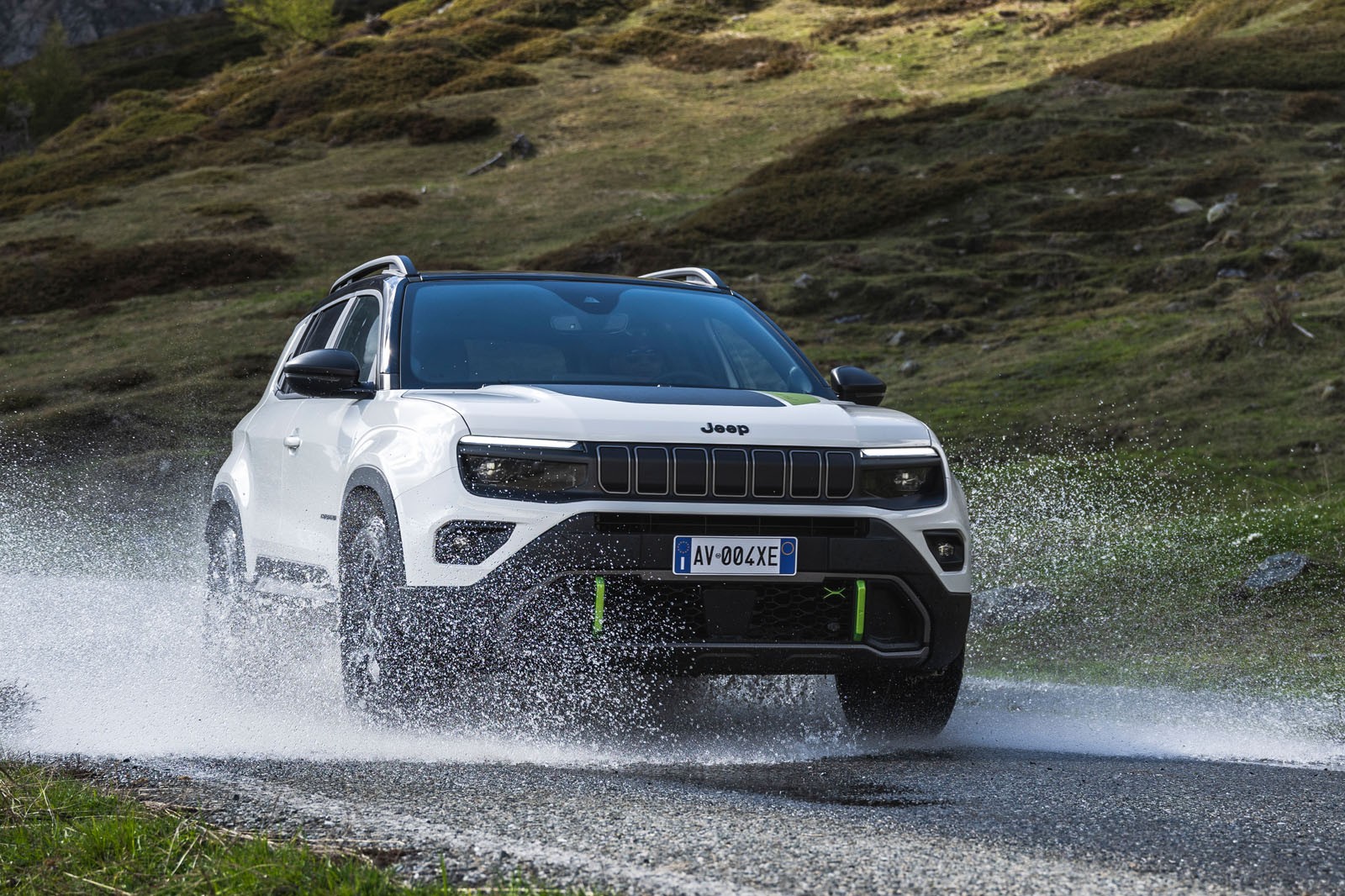
The 4xe screams outdoors. Cladding. Roof bars. Stickers. It sits 10mm higher than its siblings thanks to a lifted suspension. They even swapped the rear suspension to a multi-link setup for better articulation. Chunkier tires come standard. Want bigger all-terrains? Pay extra. It tries hard to be the adventurous cousin.
The Brains (Or Lack Thereof)
The manual petrol is the simplest beast. A 1.2-liter, three-cylinder turbo makes 99bhp. Zero to 62mph in 10 seconds flat. Top speed hits 110. Jeep claims 50.4 mpg. It’s efficient, at least.
The e-Hybrid gets cleverer. Same engine, same Puretech name, but now there’s a 48V mild-hybrid system riding shotgun. A tiny 0.9kWh电池 sits under the passenger seat. A 28bhp motor hides inside the six-speed dual-clutch auto. Combined, that’s 127bhp and151 lb-ft of torque. It sounds substantial on paper.
Then there’s the 4xe. Unusual stuff here. That 1.2-liter engine drives the front wheels via a pair of electric motors—one in the box, one on the rear axle. Total output? 143bhp. It splits torque 50:50. Both wheels spin up to 18 mph. After that? The rear motor cuts idle to save fuel. The official economy figures rival the Ford Puma’s FWD model.
Living Quarters
Inside, the manual and e-Hybrid feel almost indistinguishable from the EV. Save for blue badges. You sit high. Visibility is solid. Plenty of adjustment.
Screens vary by trim. Base gets a 7.0-inch digital cluster. Top tiers get a 10.25-inch version. The infotainment screen is 10.25 across the board. It’s logical. Crisp. Apple CarPlay and AndroidAuto? Standard. No excuses.
Practicality holds up. Combustion models aren’t punished for lacking a massive battery. Big bin in the center console. Deep door pockets. The shelf in front of the passenger? Still there. It’s useful.
But let’s be honest. It’s not as plush as a Kia Niro. Not as finished as a Hyundai Kona. It has its own vibe. Some people prefer it. Most don’t complain, though.
Space tightens in the back. Tall driver? Forget about it. In the e-Hybrid, the battery under the driver’s seat eats into foot room for rear passengers. A trade-off.
The boot is slightly better than the EV’s 355 liters. You get 380 here. Still lags behind the Kona (466 liters) and Toyota Yaris Cross (397 liters). It’s adequate. Barely.
The 4xe interior feels lazy. A range-topper with basic materials. Rubber mats. Durable seat fabric. Stellantis switchgear feels dated. Graphical interfaces? Aging. It works. It’s just… basic.
On The Road
Does the 1.2L engine hurt? No. It’s measly, sure, but not painful. The manual keeps pace with traffic. Just don’t ask for torque at high speeds. The clutch and shifter are actually pleasant to use. That’s a win.
The e-Hybrid feels quicker. Same 99bhp rating, but that E-Boost adds 40 lb-ft for a launch punch. Jeep says it’s 30% faster between 30 and 60 mph. You feel it on B-roads. Mid-range is gutsy. The gearbox, though? Inconsistent. It shifts when it wants, not when you want. And when you push? The engine sounds gruff. Nothing like the silent glide of the EV.
Electric-only range hits 1 km. Not much. Better than most mild hybrids. Nowhere near a Toyota hybrid. But for crawling around town or creeping out of a light, it’s smooth. Quiet. Refined. That’s its sweet spot.
The 4xe? More complex, worse result. Add two electric motors, and the engine still feels thrashed when pushing. The extra power doesn’t bring pep. It just feels heavier. You notice every one of the 9.5 seconds to 62 mph. It drags.
But low speeds? Decent. Shifts are sensible. Transitions are smooth. You don’t feel the split between petrol and electric. It’s tidy.
Modes matter in the 4xe. Snow. Sand. Mud. Sport liberates full power. Manual shifting engages a weird pseudo-warm-hatch mode. On twisties, it tries to entertain. But you have to work for it. And if you push those outdoorsy tires? They scrabble and scream. Not confident.
Handling-wise, the lack of a big battery helps the petrol models. They’re lighter. Direct steering feels agile. Not Ford Puma agile, obviously. Body roll in tight corners is present. It’s competent. Neat. Not fun.
Ride quality is the real letdown. Seats are flat. No lumbar support. Rough roads turn into a lecture.
The e-Hybrid fares better at speed. Smooth highway cruiser. Until it hits a lump. Then the suspension complains. Town driving exposes its limits. Cracks and bumps crash through. It gets rowdy.
The 4xe’s lift doesn’t cause excessive roll. The chassis tweaks keep cruising refinement intact. Steering is predictable. Good. But that secondary ride remains busy. Shoddy surfaces get tiring quickly. After twenty minutes, your head is bobbing. Your patience thins.
So which one is it? You want the badge. You want the options. You settle for the compromise.