The 2026 BMW M2 CS is not merely a faster version of the standard M2; it is a deliberate study in contrasts. It combines a polarizing, retro-futuristic aesthetic with track-bred engineering, all wrapped in a package that demands a premium price tag. While the “Competition Sport” badge implies a car built strictly for the circuit, real-world testing reveals a vehicle capable of handling both the rigors of a race track and the winding backroads of California with surprising civility.
Design: Polarizing Aesthetics and Carbon Fiber Diet
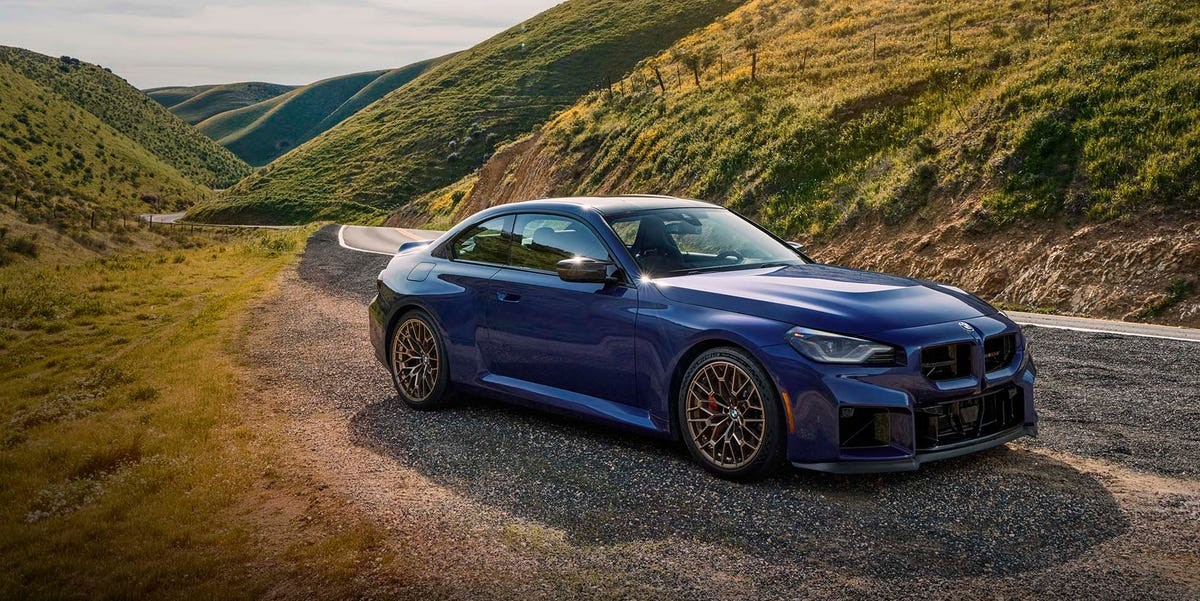
The second-generation M2 has always been an outlier in BMW’s lineup, characterized by blocky lines and horizontal grilles that recall the iconic E30 M3 but feel distinctly modern—and to some, jarring. The M2 CS amplifies this boldness. Its design features a molded-in ducktail spoiler, blacked-out grilles, and visible heat exchangers that evoke late-1990s tuner culture.
While the styling may be divisive, the engineering behind the weight reduction is undeniable. To shed pounds, BMW employed extensive use of carbon fiber-reinforced plastic (CFRP) for the roof, decklid, diffuser, and mirror caps. Inside, the carbon fiber presence continues, but the weight-saving measures have led to controversial interior changes: the removal of cupholders and armrests.
This decision highlights a tension in the M2 CS’s philosophy. It is a car that prioritizes performance metrics over everyday convenience, a trade-off that becomes more noticeable during long drives.
Performance Specifications
Under the hood, the M2 CS utilizes the same twin-turbocharged 3.0-liter inline-six engine found in the M3 and M4 Competition xDrive models. However, specific tuning adjustments give it a distinct edge over the standard M2.
- Power Output: 523 horsepower and 479 pound-feet of torque.
- Comparison: This represents an increase of 50 horsepower and 36 pound-feet of torque over the standard automatic M2.
- Acceleration: 0 to 60 mph in 3.3 seconds; quarter-mile in 11.3 seconds.
- Weight: 3,725 pounds (with optional carbon-ceramic brakes), which is 88 pounds lighter than the 2025 M2 automatic.
- Transmission: ZF eight-speed automatic only. Note: The absence of a six-speed manual option is significant, given that nearly 50% of M2 buyers typically opt for a stick shift.
The Driving Experience: Balance Over Brute Force
Testing the M2 CS along California State Route 58—a road that transitions from desert plains to mountain passes—revealed a car that is as comfortable on public roads as it is aggressive on the track.
Handling and Dynamics
The CS boasts a retuned suspension with a lower ride height and improved cooling systems. On the skidpad, it pulls 1.05 g’s, a marginal but notable improvement over the base M2. What sets the CS apart is its chassis balance. Unlike many modern BMWs that lean toward understeer, the CS offers a neutral handling characteristic. The rear end swings progressively rather than snapping, allowing drivers to control oversteer with precise throttle modulation.
Engine Sound and Transmission
The inline-six engine delivers a visceral, high-pitched scream that reviewers noted as almost unnaturally perfect. This auditory experience is partly engineered, with computer-tuned exhaust notes enhancing the emotional impact. The ZF eight-speed automatic transmission is highly competent, shifting quickly and smoothly. However, the lack of a manual transmission option remains a point of contention for purists who view the M2 as a driver’s car first and foremost.
Daily Usability
Despite its track-focused credentials, the M2 CS is not unlivable on the street. The adaptive dampers can be adjusted via programmable M buttons, allowing drivers to toggle between a softer, more compliant setting for daily commuting and a racier setup for spirited driving. The car’s ability to absorb imperfections in the road surface while maintaining precise steering feedback makes it a versatile performer.
Critical Considerations: Price and Practicality
The M2 CS comes with a significant financial premium. Starting at approximately $30,000 more than the standard M2, the as-tested price of our review car reached $111,450. This places it in direct competition with four-seat coupes like the Porsche 911, while costing nearly $30,000 more than a Ford Mustang Dark Horse.
Potential buyers must weigh these factors:
* Fuel Economy: EPA-estimated 19 mpg combined; real-world testing yielded closer to 17 mpg.
* Range: With a 13.7-gallon tank, long trips require careful planning.
* Interior Compromises: The lack of cupholders and armrests, while saving weight, reduces comfort for passengers and drivers alike.
Conclusion
The 2026 BMW M2 CS is a car that defies simple categorization. It is too expensive and impractical to be a pure daily driver for most, yet too comfortable and refined to be reserved strictly for the track. It offers a unique blend of raw power, neutral handling, and distinctive styling that appeals to enthusiasts who value driving dynamics above all else.
Verdict: The M2 CS successfully bridges the gap between track-day performance and street-legal usability. While its high price and lack of a manual transmission may deter some, its exceptional balance, engaging engine note, and versatile handling make it a compelling choice for those seeking a high-performance coupe that can handle both the circuit and the open road.