In the motorcycle world of 2026, a strange dichotomy exists. On one side, we have hyper-specialized superbikes engineered for track records and social media clout. On the other, we have the growing demand for machines that balance terrifying speed with genuine daily usability.
Most modern fast motorcycles suffer from a critical flaw: they are designed for peak performance moments but punish the rider during the rest of the journey. They feature aggressive ergonomics, harsh suspension, and high maintenance costs that make them impractical for everything other than short bursts of adrenaline.
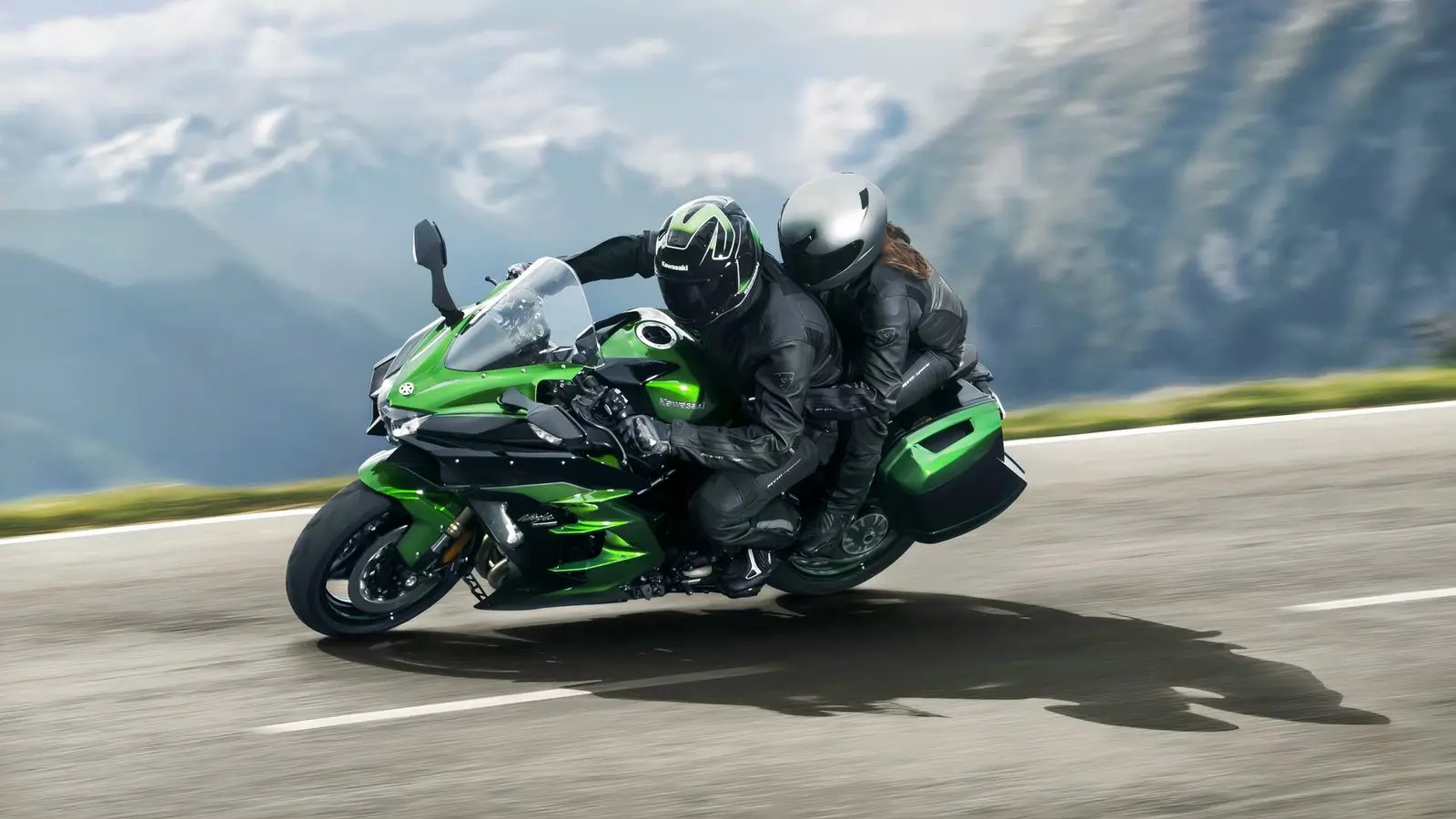
Enter the Kawasaki Ninja H2 SX. It represents a shift in philosophy. Rather than forcing riders to choose between comfort and speed, Kawasaki has created a machine that delivers both. In an era where versatility is becoming more valuable than raw, uncompromising power, the H2 SX stands out as one of the most sensible high-performance motorcycles on the market.
The Shift Away from Pure Speed
For years, the industry chased bigger numbers: more horsepower, more aerodynamic wings, and more aggressive riding positions. While modern liter-class superbikes are engineering marvels, they often feel disconnected from how most people actually ride.
Why this matters: Most riders spend the majority of their time on highways, city streets, and winding back roads—not attacking apexes at a racetrack. Yet, many high-performance bikes are tuned as if they are permanently preparing for a WorldSBK qualifying session.
The result is a category of motorcycles that feel nervous at low speeds, uncomfortable over long distances, and intimidating to own. Riders are increasingly realizing that they do not want a race bike for the street. They want a machine that feels special without demanding physical or financial sacrifices every time they ride.
The Resurgence of Sport-Touring
This realization has led to a quiet comeback for the sport-touring segment. Modern sport-tourers are no longer seen as compromised “grandpa bikes.” Instead, they are flagship machines packed with premium technology and serious performance.
Today’s top-tier sport-tourers offer:
* Advanced Electronics: Adaptive cruise control, radar-assisted safety systems, and semi-active suspension.
* Comfort Features: Heated grips and seats, upright ergonomics, and superior wind protection.
* Real-World Performance: Engines tuned for smooth, accessible power rather than peak RPM spikes.
Ironically, many of these bikes are faster than the superbikes of twenty years ago. They can cruise across states at high speeds while carrying luggage, then instantly transform into canyon-carving machines when the road opens up. This duality—performance without punishment —is what makes the category compelling again.
Kawasaki’s Answer: The Ninja H2 SX
The Kawasaki Ninja H2 SX is arguably the most absurdly sensible motorcycle currently available. On paper, it sounds like a contradiction: a supercharged hypersport-tourer derived from the same family as the terrifying H2 hyperbike. Yet, Kawasaki has managed to make it work.
Engine: Power with Purpose
The Ninja H2 SX SE is powered by a 998cc supercharged inline-four engine producing 207 horsepower and 101 pound-feet of torque.
Unlike naturally aspirated superbikes that need to be revved hard to feel exciting, the H2 SX delivers a massive wave of torque across the entire rev range. This creates a few key advantages:
* Effortless Acceleration: Overtakes on highways are easy and safe.
* Relaxed Cruising: The engine does not need to work hard to maintain speed, reducing noise and vibration.
* Stability: The supercharger provides smooth power delivery, making the bike feel composed rather than chaotic.
Kawasaki has tuned the H2 SX differently from its track-focused siblings. The gearing, throttle response, and aerodynamics prioritize stability and usability. It is still brutally fast, but it feels refined and controlled.
Comfort and Chassis
The comfort side of the H2 SX is equally impressive. The upright riding position reduces strain on the wrists and lower back, while the seat is designed for long-distance endurance rather than short bursts.
Key chassis features include:
* Semi-Active Suspension: Showa electronic suspension adjusts in real-time to road conditions.
* Premium Braking: Brembo Stylema calipers provide strong, consistent stopping power.
* Quality Tires: Bridgestone Battlax Hypersport S22 tires offer excellent grip in both wet and dry conditions.
* Weight Management: At a wet weight of around 590 pounds, the bike sounds heavy, but its chassis design hides the mass effectively once moving.
Technology That Works
One of the H2 SX’s greatest strengths is its integration of technology. Kawasaki avoided treating electronics as mere gimmicks. Instead, the features are designed to improve safety and reduce rider fatigue.
The bike includes:
* Adaptive Cruise Control: Maintains a set distance from vehicles ahead, significantly reducing stress on highways.
* Blind Spot Detection & Forward Collision Warning: Radar-based systems developed with Bosch enhance situational awareness.
* Cornering ABS & Traction Control: Provides stability and confidence in varied riding conditions.
* Smartphone Connectivity & Tire Pressure Monitoring: Keeps the rider informed and connected.
These systems integrate seamlessly into the riding experience. Nothing feels intrusive or overly complicated. The bike still feels mechanical and engaging underneath the electronics, avoiding the sterile feel that can plague some modern motorcycles.
Why the H2 SX Feels Mature
The “H2” badge carries a reputation for wild, unpredictable performance. People often associate it with smoke, flames, and terrifying acceleration. And yes, the Ninja H2 SX has that wild side. Twist the throttle hard enough, and it becomes a missile.
However, what makes the H2 SX stand out in 2026 is its maturity. It does not feel like a motorcycle trying to prove something. It feels like a machine engineered by people who understand that riders eventually grow out of choosing discomfort for the sake of image.
The H2 SX delivers drama, excitement, and absurd performance, but it packages these traits in a genuinely livable form. It is a bike that respects the rider’s time, energy, and safety.
Conclusion
The Kawasaki Ninja H2 SX is relevant because it solves a real problem. In a market full of specialized, extreme, and demanding motorcycles, Kawasaki built something refreshingly balanced.
It can commute during the week, tour across multiple states on the weekend, carry luggage and a passenger comfortably, and still perform admirably on a track day. Few motorcycles can claim to cover so many roles without compromise.
With pricing starting at $29,999, the H2 SX sits firmly in premium territory. But for riders who want a machine that is outrageously fast, exotic, and yet practical enough for daily use, it remains one of the best options on the market. It proves that you do not have to sacrifice comfort to experience true high-performance riding.