


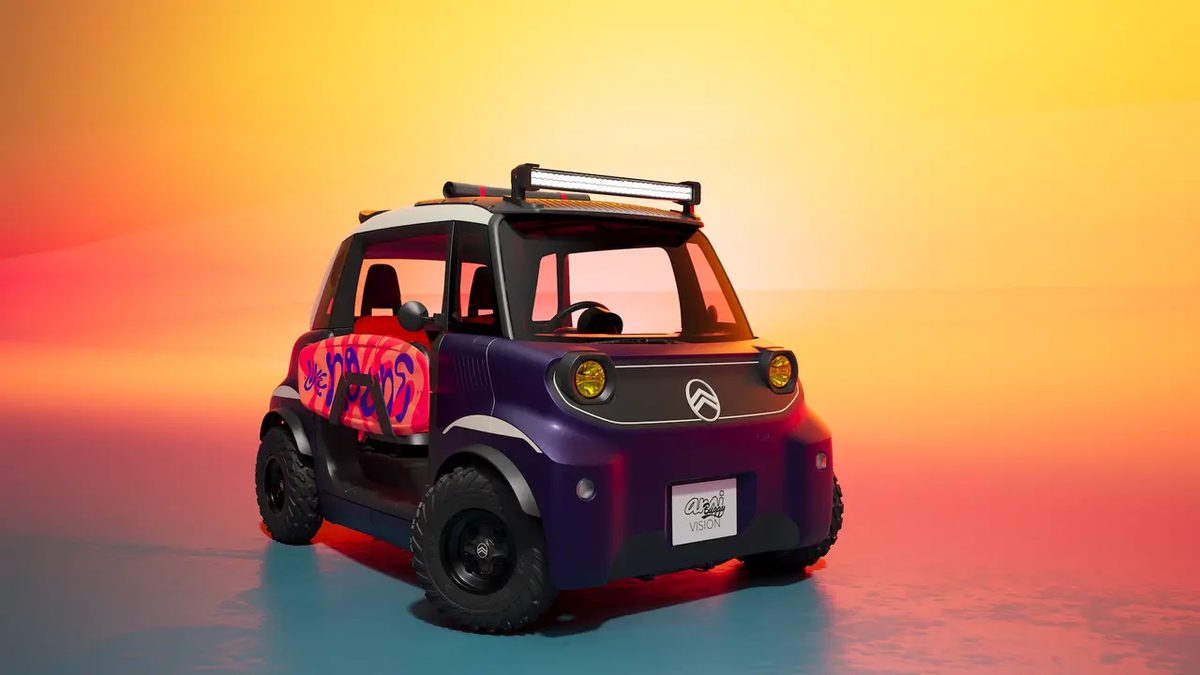
The Citroën Ami is fast becoming a staple on European city streets. It’s small, it’s electric, and you don’t need a full driver’s license to operate it. But there is a catch. The Ami, like all vehicles in its specific category, carries inherent structural limitations regarding safety. Occupant protection is restricted by what is essentially bare-bones equipment.
It is not a car in the traditional sense.
Homologation loopholes limit safety features
The Citroën Ami is homologated as a quadricycle léger (light quadricycle). This classification allows it to sidestep many of the strict safety norms imposed on conventional passenger vehicles. The result is a vehicle that lacks airbags. It also lacks advanced driver assistance systems.
The chassis is incredibly light. This is necessary to keep the total weight down and maintain the small motor’s efficiency and range. You cannot integrate robust body reinforcement structures into such a lightweight frame without destroying the vehicle’s performance and autonomy.
Put simply: the structure is too weak.
In the event of an accident, occupants in a vehicle like the Ami are significantly more exposed to serious injury. This is especially true during frontal or lateral impacts.
Crash test results reveal the danger
A crash test conducted by the German program Auto Mobil, in partnership with Dekra, laid bare these vulnerabilities. The footage is stark. It highlights the limits of “car without license” vehicles like the Citroën Ami.
Even at low speeds, the consequences of a collision can be far more severe than inside a standard city car. The micro-vehicle absorbs impact in ways a conventional hatchback simply does not.
Even at low speeds, the consequences of a collision can be far more severe than inside a standard city car.
Micro-vehicles: an underestimated danger
Is this reportage meant to ban the Ami entirely? No. But it demands a shift in how you view the machine. It is essential to use the Ami for what it actually is: a limited urban mobility device. It is designed for short trips in low-risk environments.
It is safer than riding a motorcycle or scooter. But it offers far less protection than a conventional automobile.
The popularity of these micro-vehicles should not obscure their structural fragility. This is not a manufacturing defect. It is a compromise dictated by regulation. The laws that allow you to drive without a full license are the same laws that prevent these cars from having crumple zones.
The Auto Mobil report demonstrates that the Ami is not an isolated case. The second model tested, the Aixam, produced nearly identical results. The structural weaknesses are systemic to the class.
Awareness is the only mitigation.
You need to adjust your driving behavior. You must adjust your expectations. When the steel and plastic give way, there is no backup.


