The automotive safety landscape shifted irrevocably in the mid-1990s. Before this era, if you lost control on a wet highway, it was largely up to your reflexes and luck to keep you upright. Then came electronic stability control (ESC). It wasn’t just an upgrade; it was a fundamental rethinking of vehicle dynamics.
Bosch, the German supplier, engineered the first iteration of this system. They didn’t just hand it to the public. They installed it in the Mercedes-Benz S-Class and the BMW 7-series, the two most prestigious luxury sedans available at the time. These cars became the first to leverage these new regulatory and safety devices.
More than a decade has passed since that introduction. The technology is ubiquitous now, but the branding remains fragmented. Automakers love their acronyms. Audi calls it ESP (Electronic Stability Program). Ford uses Advance Trac. General Motors brands theirs Stabilitrak. Porsche integrates it as Porsche Stability Management.
Despite the marketing differences, the underlying architecture is identical. These systems rely on high-tech sensors, the vehicle’s central computer, and precise mechanical interventions to keep the car on its intended path.
We often associate instability with high-performance machines. We imagine a Ferrari sliding sideways on a track. The reality is far more mundane and dangerous. Any car can veer off course. This happens most frequently when road conditions degrade. Rain, ice, or loose gravel can remove traction instantly.
Understanding the two primary failure modes clarifies why ESC is necessary.
Understeer occurs when the front wheels lose grip. The driver turns the steering wheel, but the car refuses to follow the curve. It plows straight ahead, ignoring the input. This is often caused by entering a corner too fast or driving on a low-friction surface.
Oversteer is the inverse. The rear wheels lose traction while the front wheels maintain some grip. The rear of the car swings out. The vehicle turns more sharply than the driver intended. If unchecked, the car spins out of control.
ESC addresses both scenarios. It does not prevent the loss of traction entirely. Instead, it detects the deviation and acts. The system applies brakes to individual wheels and may reduce engine power to restore balance. It corrects the understeer by braking the outer front wheel. It fixes the oversteer by braking the outer rear wheel.
The technology works silently until you need it. Then, it operates in milliseconds. For an enthusiast, seeing your car correct a slide without driver input can feel like cheating. But in an emergency, that intervention is the difference between a near-miss and a tragedy.
The Mechanics of Intervention
How does the system know what you are doing wrong? It compares your steering angle with the car’s actual path. If the sensors detect a discrepancy—meaning the car is not going where the wheel is pointed—the computer calculates the necessary correction.
It uses wheel speed sensors, yaw rate sensors, and lateral acceleration sensors. These inputs create a real-time model of the vehicle’s dynamics. When the model predicts a loss of control, the ESC engages.
This process is not limited to dry pavement. It is critical in low-traction environments. Snow, ice, and
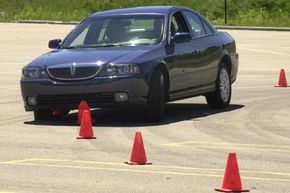
ESC doesn’t operate in a vacuum. It’s a team player, leeching data from anti-lock braking and traction control to nip accidents in the bud. The brain of this operation? The yaw control sensor.
It lives at the geometric heart of the chassis. Usually buried under the floor pan, right between the front seats. If you’re in the driver’s seat, it’s tucked near your right elbow. That’s not an accident. It’s physics.
What is yaw, exactly?
Forget the nautical jargon. Yaw is rotation around the vertical Z-axis. Imagine a pin stuck through the center of a butterfly. The butterfly spins around that pin. That’s yaw. The sensor sits right where the pin would go.
When the car starts to rotate too sharply—or not enough—the sensor notices. It screams at the computer. The computer then decides who takes the hit.
It doesn’t just slam all four brakes. That’s inefficient. It targets specific wheels. The wheel that can best stabilize the vehicle gets the squeeze. It also cuts throttle. Slows the engine. Damps the rotation.
The goal? Simple alignment. The system compares the steering wheel angle to the car’s actual vector. If they don’t match, the computer forces them into harmony. It makes the car go where you pointed it, even if your instinct said otherwise.
To understand the full scope of this electronic orchestra, we need to look at the players.
Electronic Stability Control Components
The yaw sensor is the conductor, but it needs an orchestra to play.
1. The Yaw Rate Sensor
This is the primary input. It measures angular velocity. How fast is the car spinning around the vertical axis? If you turn the wheel hard left, but the car only creeps left, the yaw rate is low. The system knows you’re understeering. It detects the discrepancy.
2. Steering Angle Sensor
This tells the computer what the driver wants to do. You turn the wheel 30 degrees left. The sensor reports it. If the yaw sensor says the car is still going straight, you have a problem. The system now knows you’re pushing the front tires past their grip limit.
3. Wheel Speed Sensors
Every wheel has one. They monitor rotational speed. This data feeds into both ABS and traction control, but ESC uses it for more than just locking wheels. It calculates slip angles. Is the rear wheel spinning faster than the front? The car is oversteering. It’s trying to spin out. The system sees the mismatch.
4. Lateral Accelerometer
Sometimes paired with the yaw sensor, this device measures the G-forces pushing you side-to-side. It confirms the yaw data. Did the car actually move sideways, or did the sensors just think it did? Redundancy matters. If the lateral accel says zero but yaw says high, something is wrong. The system trusts the physical force over the rotation rate in some edge cases.
5. The Engine Control Module (ECM)
Brakes aren’t enough. You need to kill torque. The ESC module talks to the ECM via the CAN bus. It requests a throttle reduction. The ECM pulls fuel or closes the throttle plate. The engine coughs.
How ESC Hijacks Your Brakes to Save the Day
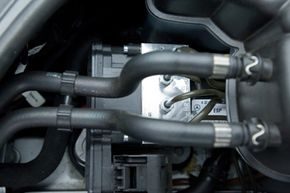
Anti-lock Braking System (ABS) used to be the holy grail of driver assistance. Before the nineties, you had to manually pump the brakes to avoid locking up and sliding into a tree. It was a skill. Now, ABS pumps them electronically, way faster than human reflexes, keeping the car pointed straight or allowing a controlled drift without total loss of control. Electronic Stability Control (ESC) doesn’t just watch ABS; it weaponizes it.
ESC monitors the vehicle’s side-to-side rotation around its vertical axis. Traction control handles the front-to-back stuff. When you’re sliding, ESC reads the yaw sensor and realizes the steering wheel angle doesn’t match the car’s actual path. That’s when it gets mean. It engages ABS on individual wheels—sometimes just one corner—and cuts the throttle. It’s not about stopping the car. It’s about making the car turn where you want it to turn, even if your feet aren’t doing anything but hovering near the pedals.
The Three Sensors That Run the Show
ESC relies on a central computer fed by three distinct data streams. If one lies, the system fails.
Wheel-speed sensors sit at each wheel. They measure rotational speed and feed that data to the computer. The ECU compares wheel speed to engine speed to detect slip.
Steering-angle sensors live in the steering column. They track intent. Where do you want to go? This data is the baseline for determining if a slide is happening.
Rotational-speed sensors, or yaw sensors, are mounted near the car’s center of gravity. They measure lateral acceleration and rotation. They tell the computer if the car is spinning out of control.
“If there’s a difference between the angle of the steering wheel and the direction the car is sliding, the ESC will work with the traction control system to engage the ABS at the proper wheel.”
Why Modern ESC Beats Old-School Driving Skills
You might remember learning to counter-steer. You might have mastered the heel-toe shift. But ESC is faster. It reacts in milliseconds. A human driver, even an expert, needs time to perceive the slide, process the error, and physically move the wheel and foot. ESC does it all before the brain even registers the mistake.
The system activates ABS on as many wheels as needed. One wheel? All four? It depends on the physics of the slide. It reduces speed while correcting the trajectory. The result is a car that refuses to go where you didn’t ask it to go.
Real-World Scenarios Where ESC Saves Your Life
Imagine hitting a patch of black ice at 60 mph. Your tires lose grip. The car begins to oversteer. The rear swings out. In an older car, you’d have to wrestle the wheel and modulate the throttle. In a car with ESC, the system detects the yaw rate, compares it to the steering angle, and brakes the outside front wheel. It’s like an invisible hand pulling the nose back into the lane.
Or consider a high-speed corner exit. You’re too much throttle. The car understeers, plowing toward the guardrail. Traction control cuts power. ESC may also brake the inside rear wheel to rotate the car back into the apex. It’s subtle. You might not even feel it happen. You just arrive at the exit without crashing.
Is ESC Worth the Cost?
ESC is standard on most new cars because regulators demanded it. But the benefits aren’t just regulatory. They’re mechanical. The sensors are cheap. The wiring is standard. The computer integration is seamless. The cost of an ESC failure is measured in lives. The cost of installation is negligible for manufacturers.
But for you, the driver, it’s about confidence. You
Why ESC Doesn’t Stop Every Crash
Let’s be clear about what Electronic Stability Control (ESC) actually does. It is not a magic force field. It won’t save you if you’re stuck in bumper-to-bumper traffic and someone rear-ends your rear bumper. That’s a different beast entirely.
When you’re inching through a jam, distance sensors might chirp at you. Collision avoidance systems might tap the brakes. But ESC? It sits on its hands. It doesn’t care about your proximity to the car ahead. Its job is far more specific: it steps in when you lose traction.
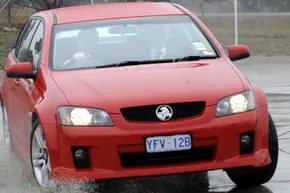
Think of the last time you hit a patch of black ice or a sudden oil slick on a rainy highway. The car starts to slide. Your steering input says “turn left,” but the car goes straight or worse, spins out. That disconnect is where ESC lives. It monitors wheel speed and yaw rate, comparing what you’re telling the car to do against what it’s actually doing. If the data doesn’t match, the system intervenes. It applies brakes to individual wheels and cuts engine power to help you regain that elusive grip.
The Numbers Don’t Lie
Why did regulators get so serious about this tech? Because the fatality stats were ugly.
The Insurance Institute for Highway Safety (IIHS) estimated that widespread adoption of ESC could prevent up to 9,000 fatal crashes every single year. That isn’t a rounding error. That’s thousands of lives.
The National Highway Traffic Safety Administration (NHTSA) drilled down further. They found that ESC reduces single-vehicle crashes by 26 percent for standard cars. For SUVs? The number jumps to 48 percent.
Think about that. SUVs are taller, heavier, and have a higher center of gravity. They roll over more easily than sedans. ESC essentially acts as an invisible tether, keeping those taller machines on the pavement when the road gets slippery. It turns a potential rollover death trap into a manageable scare.
Adoption Was Fast, But Not Instant
These statistics forced the hand of the U.S. government. They didn’t just suggest it. They mandated it. By 2012, ESC became required on all new passenger vehicles.
But the market moved faster than the law in some corners. By 2009, Consumer Reports noted that 73 percent of all cars already came with ESC as standard equipment. For SUVs, the number was staggering: 99 percent. Another 11 percent offered it as an option on sedans.
Mercedes-Benz had the early lead, installing ESC as far back as 1995. They didn’t stop at their flagship sedans. Whether you were driving a tiny Smart car or a luxurious Maybach, the stability control was standard. They understood that physics doesn’t care about your badge or your price tag.
The Bottom Line
ESC is not a substitute for good driving. You still need to slow down when the road is wet. You still need to steer into the skid. But when your reflexes are milliseconds too slow, or the tires simply can’t hold the asphalt, ESC is the difference between a near-miss and a tow truck ride.
It’s one of those invisible technologies you only notice when it’s gone. And given the data, you probably don’t want to find out what driving feels like without it.
Related Articles
- Car Safety Quiz
- 5 Crash Test Videos
- Top 5 Driving & Safety Videos
- How Airbags Work
- How Traffic Tickets Work
- How Self-parking Cars Work
- How Red-light Cameras Work
- Can a car really be death-proof?
- Have crash tests ever used live (or dead) human occupants?
- How does a laser speed gun work to measure your speed?
Sources
-
ConsumerReports.org. “Electronic stability control to be standard by 2012.” September 2006. (Nov. 10, 2009)http://www.consumerreports.org/cro/cars/new-cars/news/2006/nhtsa-proposal-to-make-esc-standard-on-all-cars-9-06/overview/nhtsa-proposal-to-make-esc-standard-on-all-cars-9-06.htm
-
Dang, Jennifer N. “Preliminary Results Analyzing the Effectiveness of Electronic Stability Control (ESC) Systems.” National Highway Traffic Safety Administration. September 2004. (Nov. 10, 2009)http://www.nhtsa.dot.gov/cars/rules/regrev/evaluate/809790.html
-
Insurance Institute for Highway Safety. “ESC and how it helps drivers maintain control.” (Nov. 10, 2009) http://www.iihs.org/ratings/esc/esc_explained.html
-
Insurance Institute for Highway Safety. “Q&As: Electronic Stability Control.” October 2009. (Nov. 10, 2009) http://www.iihs.org/research/qanda/esc.html
-
Memmer, Scott. “Stability Control: Get Your Yaw-Yaws Out!” Edmunds.com. (Nov. 10, 2009) http://www.edmunds.com/ownership/safety/articles/45992/article.html
-
National Highway Traffic Safety Administration. “Federal Motor Vehicle Safety Standards; Electronic Stability Control Systems; Controls and Displays.” April 5, 2007. (Nov. 10, 2009) http://www.nhtsa.dot.gov/staticfiles/DOT/NHTSA/Rulemaking/Rules/Associated%20Files/ESC_FR_03_2007.pdf
-
Rosenberg, Jeremy. “Electronic Stability Control.” Cars.com. June 18, 2009. (Nov. 10, 2009)http://www.cars.com/go/advice/Story.jsp?section=safe&story=techStability&subject=safe_tech&referer=