You are late. The store you need is directly across the street, far from the intersection. You scan the road. No cars coming. You step out.
What you just did is jaywalking. Crossing the street outside of a designated crosswalk or intersection. It is likely illegal where you live. But why?
Mostly, it is about pedestrian safety. The National Highway Traffic Safety Administration (NHTSA) reported 6,205 pedestrian deaths in 2019 alone. Pedestrians make up only 3 percent of those involved in traffic incidents. Yet they account for 14 percent of all traffic deaths.
Seventy percent of those fatalities happen outside of intersections. Still, many occur at intersections where foot traffic is concentrated. So, jaywalking is banned to keep people alive. Simple enough.
But the history of enforcing this rule is messy.
From Horse-Drawn Carriages to Street Crimes
The word “jaywalking” has a confusing origin. It comes from an older term: “jay-driving.”
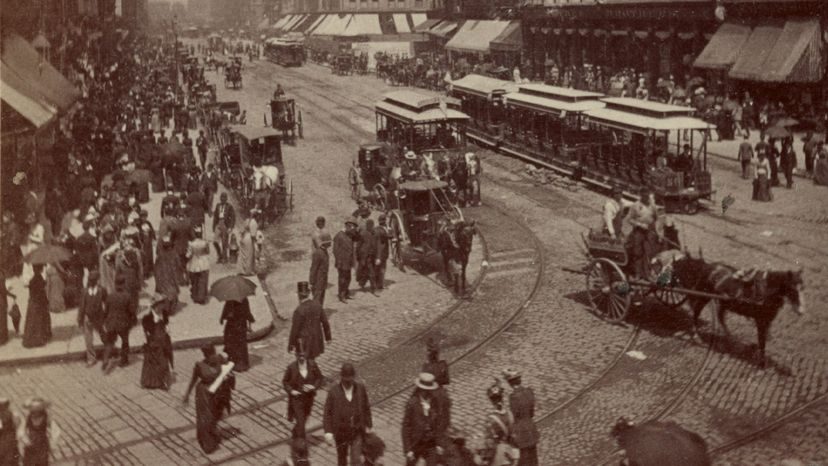
In 1905, “jay-driving” described horse-drawn carriage drivers who stubbornly rode on the wrong side of the road. The earliest print use of “jay-driving” appeared in the Junction City Union in Kansas that June. By October 1905, the Kansas City Star was using “jaywalking.”
“Jay” meant someone inexperienced. A hick. A rube. It was derogatory.
Early uses of jaywalking didn’t refer to illegal street crossings. They described poor sidewalk manners. We don’t know exactly how the meaning shifted to crossing the street illegally.
The Car Industry’s Lobbying Push
You might assume cars became status symbols quickly. That drivers were elite and walkers were lower class.
That is not what happened.
In the early 1900s, drivers were the outsiders. They were outnumbered by pedestrians who hated being pushed off the road onto sidewalks. This tension lasted into the 1920s.
Then the automobile industry started lobbying. They wanted cities built for cars. They pushed to make jaywalking a social faux pas first. Then, eventually, a crime.
Crosswalks appeared on streets in 1911. By the 1930s, laws against jaywalking were widespread. The street belonged to the car.
The Legal Gray Zone of Pedestrian Rights
Most states don’t just look at whether you were hit; they look at where you were standing. Did you step off the curb in a marked crosswalk with signals? That’s a controlled crossing. Did you dart out between parked cars or at the end of a block with no lines? That’s an uncontrolled crossing. The distinction matters for liability.
It gets messier. Traffic light meanings shift by jurisdiction. Some cities have cracked down with distracted walking ordinances, fining people for texting while crossing. Michigan has taken a different path entirely, skipping statewide crosswalk statutes and letting municipalities write their own rules. You’re driving. Do you know the local code?
The old driver-ed mantra still holds weight: right of way is given, not taken. Drivers generally must yield in crosswalks and at stop signs or signals. But if you’re a pedestrian stepping into traffic where no crossing is established, you’re expected to yield.
There are exceptions that confuse even seasoned drivers. In 19 states, drivers must yield to pedestrians anywhere in the roadway. More states require stopping for pedestrians in specific proximity ranges. It’s a patchwork.
The National Highway Traffic Safety Administration (NHTSA) offers a pragmatic view for law enforcement in their “Pedestrian Safety Enforcement Operations: A How-To Guide.” The advice? Cite both parties but focus on the driver. They are the less vulnerable population. Pedestrians and drivers often share fault in collisions, but the driver faces significantly lower risk of bodily harm.
Is Jaywalking Always Illegal and Who Pays the Price?
You’ve heard the refrain: pedestrians always have the right of way. It’s a myth. Or at least, an oversimplification. The truth depends on local law. More importantly, if a car hits a pedestrian and they get injured, who was technically “right” might not matter to the trauma involved.
NHTSA guidelines stress that pedestrians are responsible for their own safety. Motorists, meanwhile, have an obligation to look for pedestrians everywhere, at all times. It’s a shared burden.
What about enforcement? Jaywalking is illegal in most jurisdictions, but citations are rare. NHTSA’s best practices note that enforcement of pedestrian safety laws has been minimal historically. They didn’t comment specifically on jaywalking enforcement when asked, deferring to local agencies.
The bottom line for any accident involving a jaywalker is geographic. Legal consequences vary wildly by location. But beyond the legal jargon, the real issue is attention. A life-altering crash usually happens because one or both parties weren’t paying enough attention.
The Equity Problem in Traffic Enforcement
There’s a darker side to these laws that doesn’t show up in driver’s ed manuals.
According to reports from Salon and CounterPunch, enforcement of jaywalking laws disproportionately targets people of color. Take Champaign-Urbana, Illinois, a mostly white college town. Data shows 89 percent of those cited for jaywalking are Black.
Even when the laws aren’t explicitly racist, the application can be. Enforcement sometimes serves as a revenue generator rather than a safety improvement. It targets pedestrians in misleading or unfair ways.
The law might say pedestrians should yield. The stats say who actually gets the ticket.