Most car buyers assume gasoline hybrids are the only game in town when it comes to squeezing mileage out of every drop of fuel. That’s a mistake. A diesel engine already burns fuel more efficiently than its gas counterpart. Add an electric motor to the mix, and you aren’t just improving efficiency—you’re rewriting the rules.
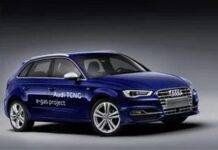
Take the Golf TDI Hybrid concept Volkswagen unveiled at the Geneva Motor Show. The numbers are staggering. In the European fuel economy test cycle, this vehicle hits 69 mpg (29.3 km/l). Compare that to the Toyota Prius, the benchmark for green driving, which manages 54 mpg (23 km/l) under the same conditions. The gap isn’t marginal. It’s massive.
But efficiency isn’t the only story here. Cleanliness matters too.
Historically, diesel engines carried a dirty reputation. They were torquey and thrifty, but they weren’t exactly praised for their environmental footprint. The Golf TDI Hybrid changes that narrative. It emits just 90 g/km of CO2. That beats the Prius, which puts out 104 g/km, and the Honda Civic Hybrid at 116 g/km. It even outperforms the Golf BlueMotion, a dedicated low-emission diesel that relies on AdBlue urea injection to scrub exhaust, clocking in at 119 g/km.
The Torque Advantage in Heavy Duty Vehicles
Torque is where the magic really happens for larger vehicles. Both diesel combustion and electric motors excel at generating twisting force. Combine them, and you get a powertrain capable of shoving heavy steel around with surprising ease.
BMW demonstrated this with the X5 Vision Diesel Hybrid concept. Also debuting at Geneva, this twin-turbocharged beast uses a 2.0-liter four-cylinder diesel engine paired with an electric motor. The result? A combined output of 220 horsepower and 295 lb-ft of torque.
That torque figure actually exceeds what the base gasoline X5’s 3.0-liter inline-six produces.
“It’s not huge, but it’s enough to motivate the X5 fairly well. With this concept, we’re showing what’s possible.”
— Dave Buchko, BMW
Buchko’s modesty aside, the engineering implication is clear. You don’t need a monstrous engine displacement to move a 5,000 lb (2,268 kg) SUV. You just need the right combination of power sources.
Real-World Specs and Mild Hybrid Tech
The X5 Vision concept doesn’t look any different from the production model you see on the highway. But underneath the sheet metal, the tech is distinct. BMW estimates the concept will deliver 36 mpg (15.3 km/l). To put that in perspective, the standard inline-6 X5 struggles to hit 15 mpg (6.4 km/l) in city driving.
The acceleration figures are respectable for its size, too. It claims a 0-62 mph (100 km/h) time of 8.9 seconds. That’s not sports-car fast, but it’s certainly quick for a vehicle of its mass, especially given the fuel savings.
So how does it work? It’s a mild hybrid system. Unlike the Prius, which can drive on electricity alone, this setup never runs purely on electric power. The electric motor assists during acceleration, boosting torque when you need it most. The system also recharges via regenerative braking, capturing energy that would otherwise be lost as heat.
There’s an extra layer of efficiency, too. The roof features solar panels. These don’t charge the main traction battery, but they help warm the cabin faster, power the audio system, charge mobile devices, and trickle-charge the auxiliary battery. It’s a small touch, but it’s all about reducing parasitic load.
BMW’s Dave Buchko confirmed the automaker plans to have a hybrid model available for sale the following year. The technology is moving from concept garages to dealer showrooms.
This isn’t the end of the story, though. While passenger cars are getting sophisticated, the public transport sector is already grappling with these dynamics. The pros and cons of diesel hybrid buses are a whole different beast—though if you live in a major city, you’ve probably already sat in one without realizing it.