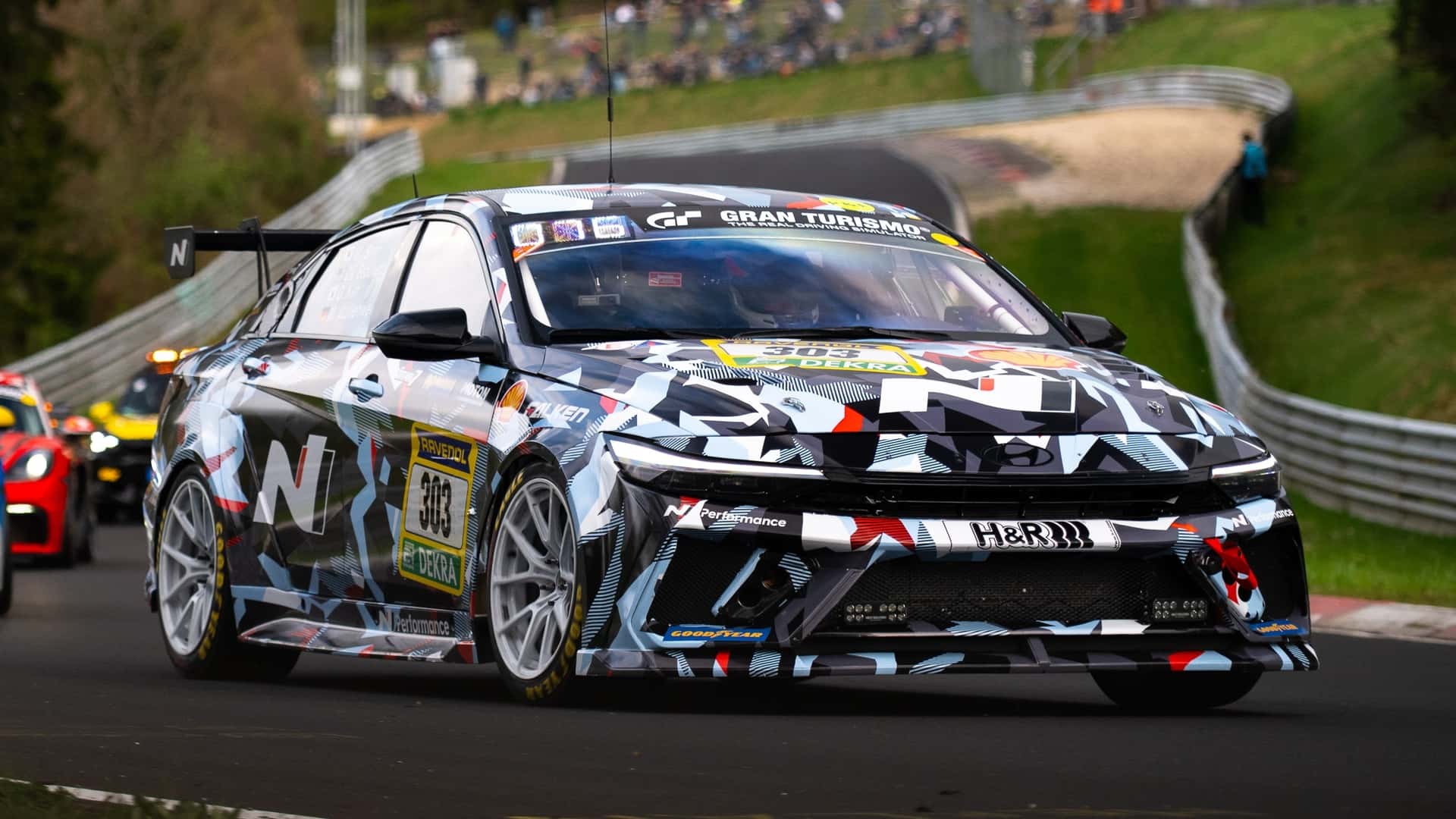
Hyundai is preparing to push its engineering limits on one of the world’s most demanding racetracks. Next month, the automaker will debut its next-generation high-performance N engine during the prestigious 24 Hours of Nürburgring race.
The company plans to use two specially equipped Elantra N race cars to put the new powertrain through its paces, using the grueling endurance race as a real-world laboratory.
Testing Under Extreme Conditions
While Hyundai has kept specific technical specifications under wraps, the company has confirmed that the new engine is designed to offer “improved power and response characteristics” while remaining compliant with increasingly strict global emissions regulations.
The primary goal of this deployment is validation. By racing at the Nürburgring, Hyundai aims to prove the engine’s durability and performance under extreme thermal and mechanical stress. This “trial by fire” approach is a hallmark of Hyundai’s development process; a decade ago, the company used a similar prototype testing strategy with the i30 to pave the way for its current successful 2.0-liter turbocharged engine.
Closing the Power Gap
The move toward a more powerful engine is a strategic necessity for Hyundai’s performance division. Currently, the Elantra N produces 276 horsepower and 289 pound-feet of torque. While capable, these figures place the Elantra N at a competitive disadvantage when compared to its primary rivals:
- Honda Civic Type R: Delivers 315 hp (and carries a higher price tag).
- Volkswagen Golf R: Produces 328 hp.
- Volkswagen Golf GTI: Offers 241 hp (at a similar price point).
By upgrading the powertrain, Hyundai is looking to bridge this gap, offering more raw performance to compete with the established heavyweights of the “hot hatch” and performance sedan segments.
Evolution or Revolution?
Industry analysts suggest that rather than a complete ground-up redesign, this new engine may be a highly refined evolution of the existing 2.0-liter architecture. If this is the case, enthusiasts might expect a power bump targeting the 300 hp mark, focusing on smoother power delivery and better throttle response rather than a massive leap in displacement or forced induction technology.
The Nürburgring serves as the ultimate proving ground, ensuring that when these engines eventually reach showroom floors, they are as reliable as they are fast.
Conclusion
Hyundai’s participation in the 24 Hours of Nürburgring signals a major step in the evolution of its N performance brand. If the testing proves successful, the next generation of Elantra N models will likely offer the increased power necessary to compete directly with the industry’s top-tier performance compacts.