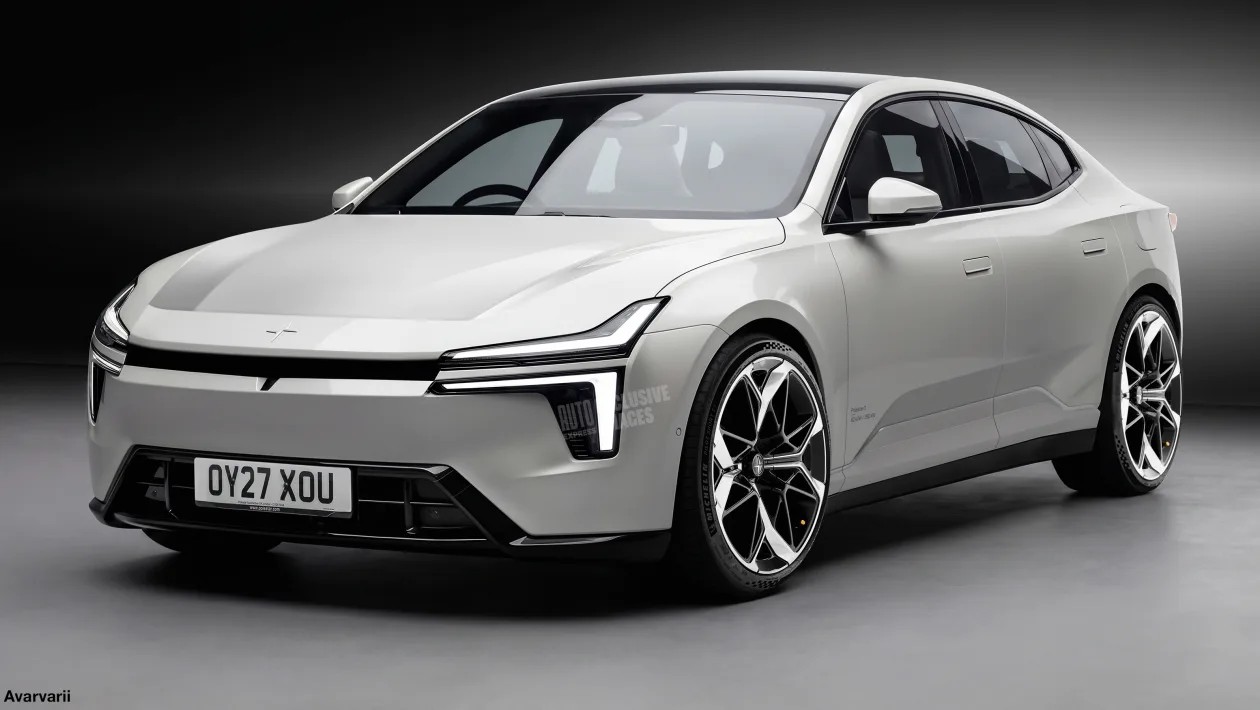
The Polestar 2 isn’t just getting an update. It’s getting a personality transplant. By 2027 the car will shed its current awkward SUV-coupe stance. It becomes a saloon. A sporty one.
This is Polestar’s first time replacing an existing model from the ground up. It marks a fresh start for the brand.
New Boss, New Face
Enter Michael Lohscheller. The ex-Opel chief is steering the ship now. Alongside him is Philipp Römers the new design lead plucked straight from Volkswagen Group.
Römers designed the Audi e-ttron GT. He also gave us the Mk7 Golf. Cars with actual proportion. Cars that look good.
He wasn’t vague when pressed.
“The new design language… it would change a few things.”
Specifically height. The current 2 sits high. It has that plastic cladding every crossover insists on wearing. Gone.
Will it be lower? Römers wouldn’t confirm it outright. He called the current design a “good car.” Diplomacy at its finest.
Lohscheller was blunter. Success is boring to innovate. Polestar has sold over 180000 of the current cars. They don’t need a revolution. They need evolution. They need to keep the owners happy while squeezing out more battery tech.
Long Enough for BMW
Teasers suggest the car will drop closer to the pavement. It will also stretch out.
Currently just over 4.6 meters. Add 100 millimeters and it hits BMW 3 Series territory.
“Customers told us they would like a bit more room.”
Lohscheller didn’t mince words about the back seat space lacking. The new car fixes it. It keeps the good bits. Adds the missing bits.
Horizontal lines will dominate. They lower the visual profile. No traditional grille. Instead there is that distinctive Polestar bridge across the nose. It pushes air up for better aerodynamics.
It’s functional. It’s sharp. It’s the ‘dual-blade’ lamp era.
The Beast Inspires the Future
Power is still a black box. 2027 is a long way off.
But Römers mentioned ‘The Beast’. Polestar’s limited-edition performance model from 2022 had 469 bhp and a nasty attitude. He sees it as inspiration.
Current models offer up to 416 bhp in dual-motor form. Sprint to 62 mph in 4.3 seconds isn’t bad. The range? Claimed 408 miles for the single-motor version.
Real-world? Different story. WLTP figures often miss the mark. Engineers want to fix the gap. Better charging than the current 200kW peak is also on the list.
Look at the Volvo EX60. Its sibling. Peak power hits 571 bhp there. Range stretches to 503 miles. With a longer body the new 2 can swallow bigger batteries. Expect real gains.
Screens Tilt Toward You
Inside things change too. Grey interiors are out. Römers wants warmth. More switches. Less touch-glass frustration.
The screen angles toward the driver. Cockpit style. Human-focused.
It sits on a new architecture. Finally. Polestar is tired of using too many different platforms for too few cars. The old 2 the SUVs the aluminum GT number 5 they all sit on different bones.
Waste. Inefficiency. Lohscheller hates it.
Sharing the Pain (and Gains)
Geely is the owner. Geely owns everyone. Lotus Lynk&Co Zeekr. Li Shufu issued a “Taizhou Declaration” back in 2024. The message was simple: share parts. Share powertrains. Stop burning cash.
The new platform is a group architecture. Volvo and Geely R&D feed into it.
“We have access to probably best EV technology in the world.”
Lohscheller isn’t bragging. He’s stating logistics.
Centralized computing is key. Software-defined vehicles mean the hardware matters less than the brain. Autonomous features safety tech it all rides on fast processors. Planning this takes years. Polestar is catching up.
The platform is flexible. Different lengths wheelbase options. The upcoming mid-size SUV (number 7) due in 2028 will likely ride the same bones as the 2.
Römers is okay with it. Volkswagen proved platforms don’t kill identity. A VW is not an Audi.
“We want to avoid a horse-race mentality.”
Brands get distinct directions. Shared DNA.
Prices in the UK will start under £50000. Summer 2027 launch.
Wait and see. Or buy the old one before they disappear.