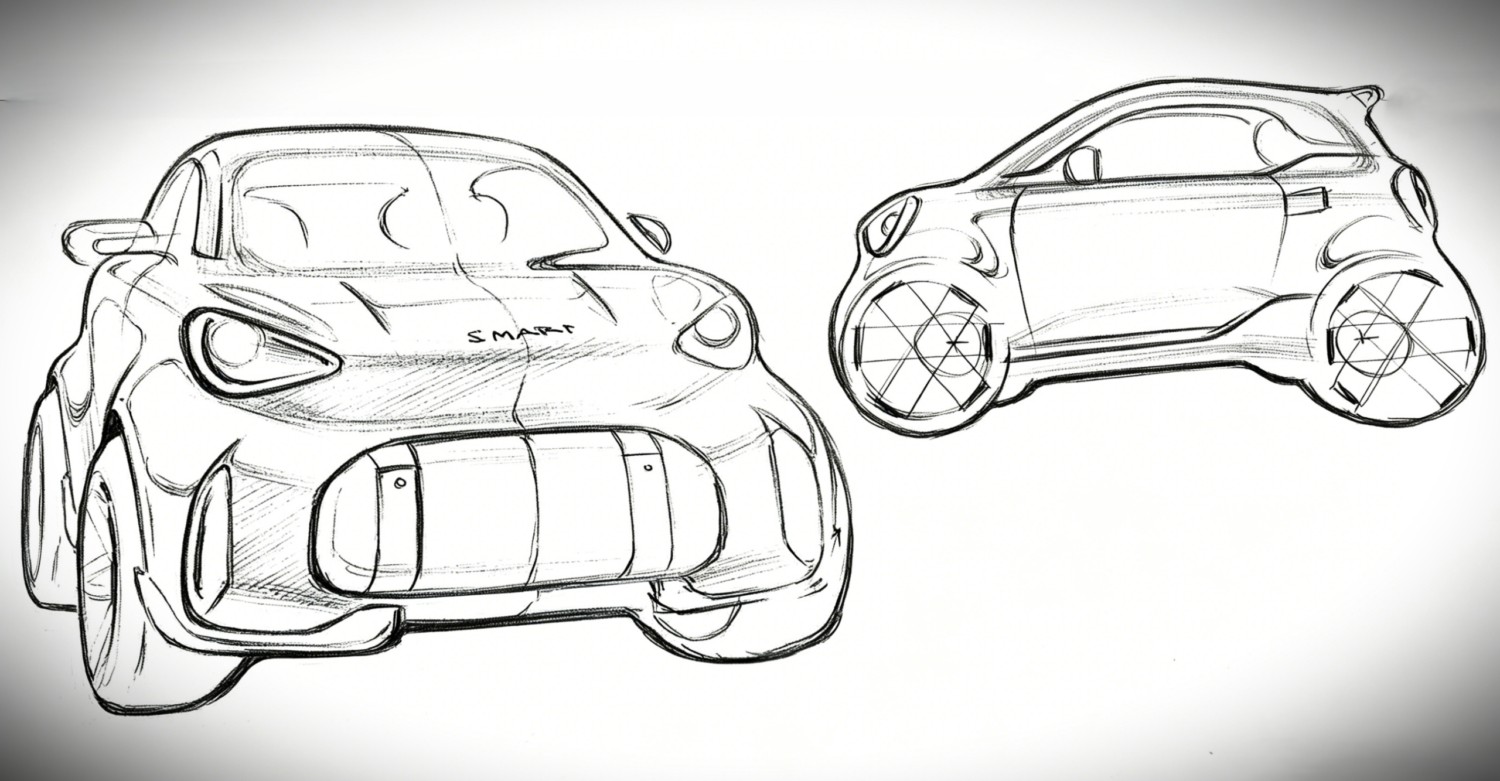
Ahead of the 2026 Beijing Auto Show, Smart has announced a major expansion of its electric vehicle lineup. On April 22, the brand will host a global event to debut two distinct models: the Concept #2 design study and the #6 EHD, a new fastback sedan. These launches signal a strategic move to capture both the compact urban market and the larger sedan segment.
Returning to its Roots: The Concept #2
The Concept #2 serves as a design preview for the upcoming production Smart #2. While the brand has recently focused on larger SUVs, this new model represents a return to the compact, urban-focused DNA that originally defined the smart brand.
- Design & Layout: The concept features a two-seat configuration reminiscent of the classic smart fortwo.
- Platform: Unlike its predecessors, the #2 will be built on a fully electric platform.
- Aesthetics: The design study showcases a modern, compact silhouette with a distinctive two-tone white-and-gold finish.
Recent sightings of the Smart #2 undergoing road tests in China suggest that the transition from concept to production is already well underway.
Expanding Upmarket: The #6 EHD Fastback
In a significant departure from its traditional small-car identity, Smart is moving into the sedan market with the #6 EHD. This model is set to be the brand’s first fastback, targeting a more premium and spacious segment.
The #6 EHD utilizes a “wheels-at-the-corners” layout, a design principle that optimizes interior cabin space by pushing the wheels to the extreme edges of the vehicle’s footprint. Early previews indicate a cabin centered around high-tech digital interfaces and a minimalist, simplified aesthetic. The model is slated to debut in the Chinese market first.
A Diversifying Portfolio
Since its restructuring as a joint venture between Mercedes-Benz and Geely in 2019, Smart has undergone a massive transformation. The brand is no longer limited to tiny city cars; it has successfully built a ladder of electric models including the #1, #3, and #5 SUVs.
The introduction of the Concept #2 and the #6 EHD demonstrates a “sandwich” strategy:
1. Downsizing to capture the micro-EV urban market (Concept #2).
2. Upsizing to compete in the larger, high-performance sedan market (#6 EHD).
Both models benefit from the expertise of the Mercedes-Benz global design team, ensuring a premium feel across different vehicle sizes.
Market Context and Sales Trends
While the new models promise growth, Smart faces a challenging competitive landscape in China. Recent sales data reveals a period of volatility:
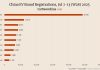
- March 2026 Performance: Smart sold 1,717 vehicles in China. While this was a massive 97.1% increase compared to February, it represents a 33.2% decline compared to the same month in the previous year.
- Year-over-Year Trend: Monthly volumes in 2025 typically ranged between 2,000 and 3,700 units. The current 2026 figures suggest a contraction in market share, highlighting the intense pressure from local Chinese EV manufacturers.
The success of these new models will be critical in reversing the recent downward trend in sales and proving that Smart can maintain its premium identity in an increasingly crowded electric market.
Conclusion
Smart is attempting to redefine itself by bridging the gap between compact urban mobility and larger, sophisticated electric sedans. The upcoming debuts in Beijing will serve as a litmus test for whether the brand can regain its momentum in a highly competitive global EV landscape.