Think about the irony. BMW built a liter bike so revolutionary it changed the sport. They reverse-engineered it. Not from scratch. From a 2005 Suzuki.
That specific GSX-R1000 was the ghost in the machine. It was clean. Raw. Analog. And before electronics turned everything into a simulation, this was as close to real riding as it got.
The Ghost Of 1985
Start back at the beginning. 1985. Suzuki dropped the GSX-R750 onto the market. It wasn’t just a bike. It was a threat. The oil-cooled engine, the aluminum frame. 395 pounds. It dominated endurance racing. Half the top ten at Suzuka were Suzukis.
By the nineties, though, physics bit back. Oil cooling couldn’t handle the heat anymore. Water cooling required radiators. Radiators pushed the steering head forward. The frame twisted. Weight climbed by 60 pounds.
Disaster.
Suzuki scrambled. They borrowed Yamaha’s twin-spar frame design to get rigid again. They shrunk the engine down, packing heat into smaller cases. By 2000 they had clawed the weight back. Then came the liter class.
- The GSX-R100K arrived. It was just the 750 engine stretched out. 998cc. Light. Fast. But flawed. It needed a fix.
The K5 Perfect Storm
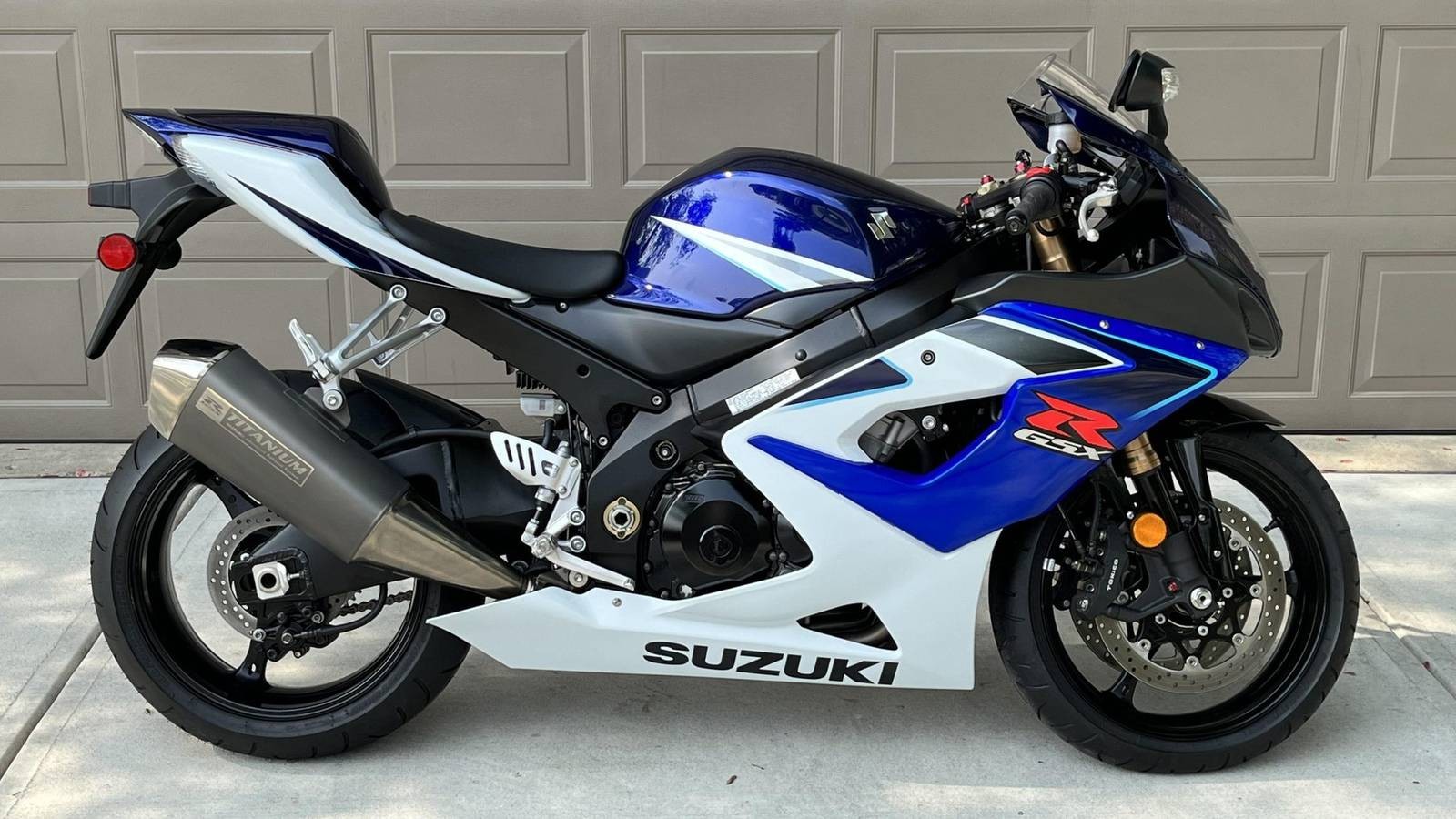
Enter the 2005 GSX-R100 K5. This wasn’t an update. It was a rebuild.
New engine. 74.3mm bore. 59mm stroke. High compression at 12.5:1. Titanium valves. Chrome-nitride rings. They shed 4 pounds just inside the mill. 175 horsepower. 87 pound-feet torque. And here’s the kicker: it came with a back-torque-limiter clutch. First for the 1000 class.
The weight? 365 pounds dry.
Think about that. The original 1985 R750 weighed 395 pounds, and that had half the capacity. The K5 made 50 more horsepower and was 30 pounds lighter.
Zero traction control. No ABS. No ride modes. No electronics holding your hand.
You twist the throttle. The long-stroke motor pulls linear and hard. 0 to 60 in 2.35 seconds. If you crashed, you did it because you tried too hard, not because a sensor guessed wrong. It was the last gasp of pure analog control. Suzuki finally undid twenty years of weight gain. They reached the peak.
When Regulations Killed The Vibe
- The K7 launched. Euro 3 emissions laws hit Europe hard. Suzuki couldn’t just go fast anymore. They had to be clean.
Narrower bores. More RPM needed. The engine revved higher, dizzyingly high at 12,000rpm for peak power. It made 182 hp. Sounds better. But the bike got heavier. The new exhaust to meet standards added 14 pounds.
It lost its soul. The K7 was a different beast. Faster on paper. But the magic? Gone. The sweet spot between weight, torque, and freedom was gone.
BMW’s Secret Benchmark
Here is where the story shifts. BMW was watching.
They didn’t want to copy Suzuki’s look. But they wanted to copy the feel. The architecture of the K5 was considered “perfect” by many engineers at the time. Compact engine. Great torque. Unmatched lightness.
BMW bought K5s. Lots of them. They took them apart.
They analyzed the chassis dynamics. They looked at how the power came on. They measured the wheelbase and the swingarm pivot. It’s an open secret in the industry, even if BMW doesn’t admit it officially. They reverse-engineered the geometry to beat the master.
The resulting 2009 S 1000 R? It had the same spirit. But with twists. BMW went over-square for the engine. Higher revs. Much faster top ends. 193 horsepower against Suzuki’s rivals at 180. They added ride-by-wire. Traction control. An optional quickshifter.
It was the future. Cold. Precise. Dominant. Built on the bones of Suzuki’s past.
Buying The Past
The K5 sits in a strange spot now. It’s a legend, but you can buy one for $4,500 if it’s in good shape. That’s cheaper than a new entry-level Suzuki cruiser. Kelley Blue Book puts typical listings near $5,000.
Is it a collector item yet? Not really. Not priced that way.
But there are traps. This bike is over 20 years old. Inexperienced riders bought them because they were affordable track weapons. Expect crash damage.
Check for two major recalls: cracked frames and bad front brake master cylinders. If those haven’t been fixed, walk away.
Watch the fuel pump gaskets. They leak. Check the fork seals. Rust happens. Panels rattle. It’s an old machine. Find something near-stock. Modifications are easy, but stripping it back is expensive.
A Fading Memory
The K5 represents a gap in time. A moment where performance wasn’t limited by laws or processors. It was limited by steel, rubber, and skill.
For a generation that grew up watching BMW dominate, the S 100 0 R feels like the apex. But its DNA comes from a blue machine from Kyoto.
We don’t make bikes like the K5 anymore. Emissions rules prevent the simplicity. Electronics prevent the risk.
Does that make it better? Or just different? The market decides. Right now, you can still find them in the weeds of online listings. Quietly waiting for someone to remember what speed felt like without a computer watching.