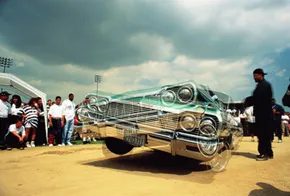
The soul of a lowrider is not only in paint and chrome. It’s in the suspension. More specifically, the interaction between the car and the road. There are two main camps here. air suspension. Hydraulic suspension. Either method allows you to lower the car until the fender touches the tire. However, the mechanisms behind them are completely different.
Air suspension route
Most lowriders start with air suspension. This is a entry drug. Replace the heavy-duty steel coil spring with a high-strength rubber bladder. Next, add the air reservoir and the compressor. The compressor pumps air into the bag. Deflate the bags, the car sinks. It will go up when you fill it.
Why do people like it? It is very smooth. This is very practical. You can drive to the show without hurting your spine. Installation is very easy. Replace the spring, add the tube and connect the control unit. The cost of components for a simple system is about $400. If you like more bags and a better controller, the price is over $1,000. Labor costs vary greatly depending on how much adjustment you are doing. But for everyday drivers who like to look mean every once in a while, the Air is standard.
Hydraulic Obsession
And then there is the Holy Grail. Hydraulic suspension. It’s not about comfort. It’s about performance art.
Hydraulic systems use hydraulic actuators instead of airbags. Think of it as a bladder filled with fluid instead of air. A high-pressure pump injects fluid into the bladder. Quickly. Violent. It’s like a controlled explosion inside the suspension components. The fluid expands the actuator and presses against the chassis with exceptional force.
The actuator expands due to the liquid entering it, pushing against the surrounding parts and causing them to fly apart.
This is a physics in action. Press firmly against the ground. The ground pushes back. You jump. Hydraulics do the same thing in cars. They make it jump. Jump. dance. In some lowrider contests, cars are actually judged on how well they can execute these maneuvers.
It’s complex. It’s expensive. An extra car battery is needed to handle the electrical load. A single actuator or pump costs about $500. Each vehicle requires at least two and sometimes as many as four. When you add the cost of batteries, wiring, and labor, it’s a huge investment. In some cases, the jump may be too high to drive the vehicle safely. Therefore, the driver controls the hydraulic system with a remote control.
Why is it important?
Both systems belong to the category of height-adjustable suspension. But there are nuances. When the general public talks about “lowering the ride height”, they often mean air suspension. They imagine cars landing slowly at auto shows. Alternatively, drivers raise the front end to avoid speed bump on the highway and then lower it back down when parking. It’s all about stance. It’s all about aesthetics.
Hydraulic system? They are related to movement. They are about the show.
Lowriders are expensive to build. But they are also collector items. Understanding how suspension works will help you understand why a clean setup commands a premium price. It’s not just about having a car that touches the ground. It’s about a car that can touch the ground on command.
The culture behind this machine is as deep as the power of its hydraulic system. The 1975 hit “Low Rider” did more than just name the car. It defines the vibe. Cruise slowly. Cool poses. Competent stance. The song captures the essence of the lifestyle that keeps these cars running. Not just metal and fluid. It’s the rhythm. Once you hear it, you’ll never forget it.