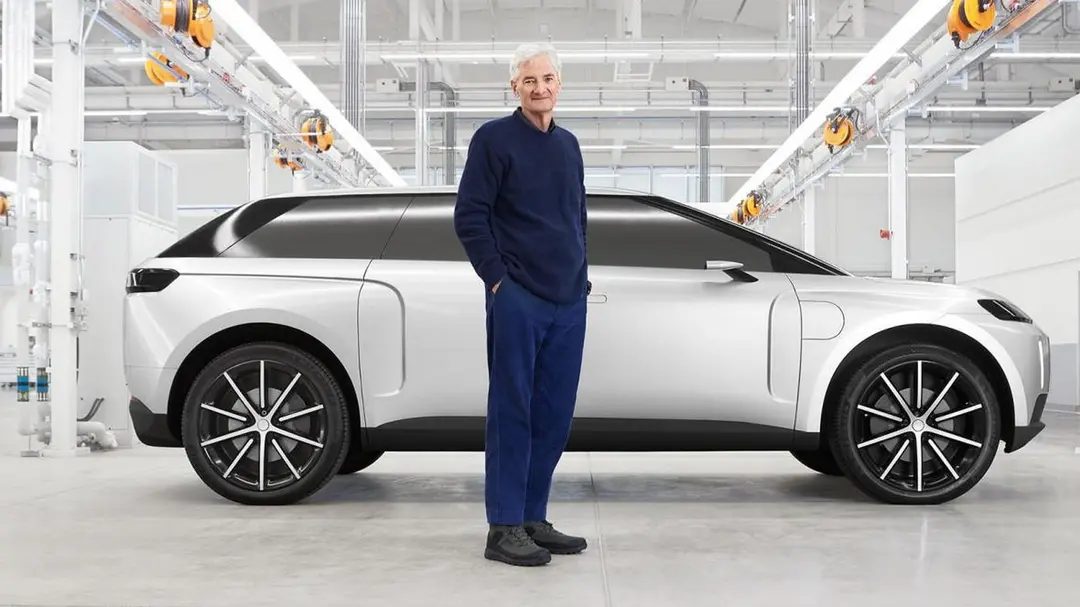
Rarely do people get to officially see a car project that never comes to life. But James Dyson, the British billionaire who invented vacuum cleaners and air purifiers, decided to break this rule. In an interview with the Sunday Times, he revealed the Dyson N526. It’s a prototype electric SUV that his company developed for several years starting in 2017, but canceled the project last October. The reason? They couldn’t find a business model that makes sense financially.
Given the ambitious specs Dyson is talking about, you can see why they backed off.
Rivals of Tesla’s flagship model
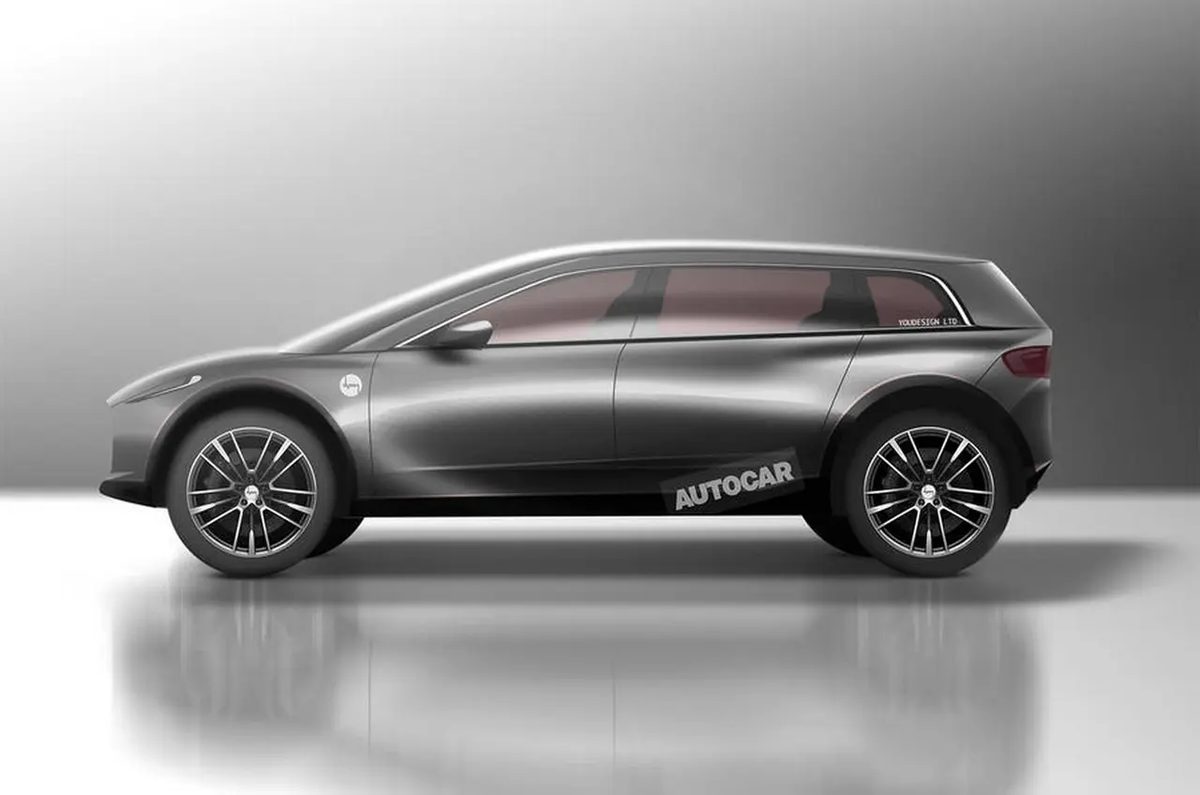
The codename for this ghost car is Dyson N526. It is designed as a 7-seat electric SUV. The goal is clear: take on the Tesla Model X. The design language is very aggressive. This profile reflects the sporty proportions of the Range Rover Evoque, but also has its own characteristics.
The most notable feature is the windshield. Dyson claimed the rake was steeper than that of a Ferrari. For an SUV, that’s a bold statement. The dimensions backed up the presence. The length of the prototype is 5 meters. The width is 2 meters. At 1.7 meters tall, it is much more than just a car. It was a statement of scale.
Inside the abandoned prototype
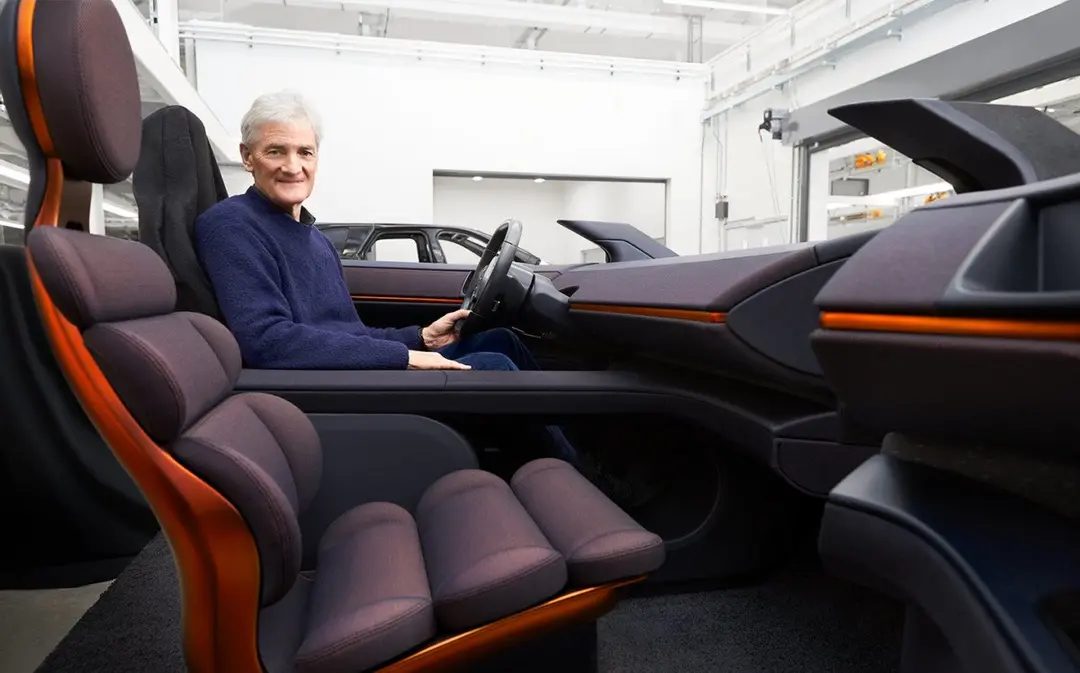
Photos of the interior reveal a design that leans heavily towards the future. The seat is a segmented module instead of a traditional support part. The headrests were round and visually distinct. It looks more like the cockpit of a spaceship than the interior of a car.
Dyson describes the dashboard as minimalist. The control interface is based on a floating heads-up display. It sits at eye level and mimics the appearance of a hologram. This approach eliminated clutter. This forces drivers to focus on the road and the digital data projected in front of them.
“We realized we couldn’t make the business work.” – James Dyson
The design is impressive. Aerodynamics are adjusted to reduce drag. The powertrain was designed for high performance. Yet, the cost of bringing this vision to market was too high. The margins simply didn’t exist. Dyson admits the project was a learning experience. This taught the company a lot about electric car development. However, it did not lead to mass production.
Why the project failed
The fault was not technical. It’s financial. Electric vehicles require significant investment in battery technology and manufacturing infrastructure. Dyson’s team is competing against established automakers with deep pockets and existing supply chains. The N526 was a showcase of what could be done. This is not a profitable product.
Design details are forward-thinking, from the steep windshield to the holographic display. However, the market is not ready to pay for such an innovation. This project remains an interesting footnote in automotive history. I want to remind you that some ideas are too expensive to implement, even if you have good financing.
The Dyson N526 is gone. However, there are still questions about the future of electric SUVs. Will we see more ambitious designs from non-traditional players or will the market continue to be dominated by those with the luxury of scale? The answer is still unclear.
the N526 Prototype: A nearly 536 horsepower beast
The figures that come with the Dyson the N526 are amazing. This is more than just an SUV. This is a 2.6 ton electric mastodon. Under the hood, or rather under the floor, there are two electric motors that produce 536 horsepower and 650 Nm of torque. Thanks to this powertrain, the prototype reaches a top speed of 200 km/h and accelerates from 0 to 100 km/h in 4.8 seconds.
But the real headline is its range. Thanks to solid-state battery technology, Dyson claims it can travel 965 kilometers on a single charge. If this car goes on sale in 2021 as planned, it will pose a serious threat to the current luxury electric car market. This information alone has no objections among enthusiasts.
Why did James Dyson invest 560 million euros and then immediately withdraw?
Not only did James Dyson finance this project, he personally put €560 million into the N526 and ultimately abandoned the joint venture. Economic logic is tough. He told The Sunday Times that the car would have to sell for at least £150,000 (about €168,000 at current exchange rates) to break even. This price is very high as a retail price, so sales may be limited to a limited number of very wealthy individuals.
Although the design was impressive, it was not economical. Dyson realized it needed some scale to compete in volume with traditional car manufacturers, but it didn’t have the will or ability to maintain that scale. The result was a technically convincing, but commercially unprofitable car.
Solid-state batteries: the true legacy of the the N526
The car itself disappeared, but the technology behind it did not. Dyson has made it clear that it intends to take advantage of the innovations developed for the the N526, particularly its solid-state battery system. These batteries have a range of up to 965 kilometers, so their energy density and safety have significantly increased compared to traditional lithium-ion batteries.
the N526 served as a testing site. The resources used to develop this electric SUV will not go to waste. They will be redirected. The goal is to commercialize the battery technology independently and supply it to other manufacturers or incorporate it into future consumer products. Although the car failed, the technological advances remained a valuable asset.
What could have been
It’s impossible to know exactly how the market will react to the Dyson the N526. The automotive industry is ruthless, and a brand best known for vacuum cleaners and fans for high-end electric cars may be met with skepticism. But the scale of Dyson’s investment, well beyond the budgets of many emerging EVs, suggests he is confident the product will appeal.
The decision to withdraw the N526 highlights the harsh reality of the transition to electric vehicles: simply having the technology is not enough. You need a business model that works at scale. This model remains difficult for Dyson. But with its focus on solid-state batteries, the spirit of the the N526 lives on even after the body is gone.
End of Dyson cars
Electric cars that never existed have officially been phased out.
On October 11, 2019, Dyson announced that it is ending its ambitious luxury electric car project. What is the reason? They can’t make the numbers work. After two years of intensive development, the British engineering firm admitted that it was unable to turn the concept into a commercially viable product.
This wasn’t just a pivot. This is a complete shutdown.
Dyson started talking about building electric cars in late 2017. The design is simple, bold and 100% Made by Dyson. No partners for the core design. No outsourcing the engineering. They want complete control over every bolt and cable.
Now, James Dyson is stepping back. The founder and CEO made it clear that while his team had created something great, the business just wasn’t sustainable.
Why was it cancelled?
It’s not that the car didn’t exist on paper. It did.
In a statement, Dyson acknowledged the effort put into this project. Autotiimi has designed what is called a “magic car”. But “excellence” can’t pay its bills if it can’t sell at a big enough profit to keep the lights on.
James Dyson has been very vocal about this situation. He pointed out that there was an attempt to market the project to potential buyers. That attempt failed. No one wanted to buy the blueprint.
“The team at Dyson Automotive designed a great car… but despite all the hard work that went into developing it, commercializing it wasn’t easy.”
This sentence carries a lot of weight. It’s not a failure of engineering. This is a failure of market fit or cost structure. Dyson insists it’s not a disaster for its workers either. Considering its complexity, what has been achieved is enormous. But the market said no.
What does the car look like?
We will never see the final product. But a patent filed in mid-2019 offers a glimpse of what it might have been like.
This sketch depicts a large seven-seater crossover. Think Range Rover territory in size, but with a different shape. It combines the height of an SUV with the roofline of a sedan and a low center of gravity. To achieve this, the seats are reclined much more than in a standard SUV.
The size is large. The length is about 5 meters. The wheelbase is longer than many competitors.
Next, the wheels.
Dyson planned to use massive, narrow tires. Probably 24 inches in diameter. The logic is very specific. Thinner tires reduce rolling resistance. It also increases the moment of inertia, which helps restore energy during braking. It was a clever trade-off Reduced resistance, increased efficiency, better grip on slippery surfaces and less risk of aquaplaning.
The body would have been aluminum. Dyson has signed an agreement with a tire manufacturer to supply customized rubber.
The Battery Gamble
The focus of the project is the battery. Or rather, there is a shortage of proven batteries.
Dyson invests in solid-state technology. In particular, we focus on two types. One of these comes from Sakti3, a startup Dyson acquired in 2015.
Solid-state batteries are the holy grail of electric vehicle technology. It’s safer this way. Loading is faster. Pack more energy into a smaller space. However, they are notoriously difficult to produce on a large scale.
Dyson had announced a launch target of 2021. As of mid-2019, solid-state batteries won’t be ready for prime time. Although the technology is mentioned in the patent, there is no indication that the battery is ready for production.
Without a functioning accurate solution, the car is a blank slate.
Where is technology headed now?
The project is dead, but knowledge is not dead.
Dyson has promised to transfer many of its automotive employees across the group. Some people will leave. Those staying will take their experience with them.
James Dyson lists specific technologies that will survive after the shutdown.
* Solid-state batteries
* Sensor technology
* Vision systems
* Robotics
* Machine learning
* Artificial intelligence
These are not just car parts. These are tools suitable for Dyson’s core business. Vacuum cleaners. Air purifiers. Hair care devices.
The company intends to commercially utilize these technologies in other product lines as well — this is a retreat from the automotive industry but an expansion into the home appliance industry.
Not so with price tags
I don’t know the final price. But James Dyson gave some clues.
He mentioned Tesla and Range Rover. These two are completely different brands. Tesla is a pioneer in technology and often competes on value and performance. The Range Rover is a pure luxury car and comes with a hefty premium.
If Dyson is targeting this segment, this car will be expensive. High-level positioning requires high profits. Big profits require volume and exclusivity. Dyson can’t solve the volume problem.
That’s why the car remains a ghost. “Fine” concepts disappear when reality gets in the way.
The team tried. they failed. That technology still exists. Cars aren’t like that.