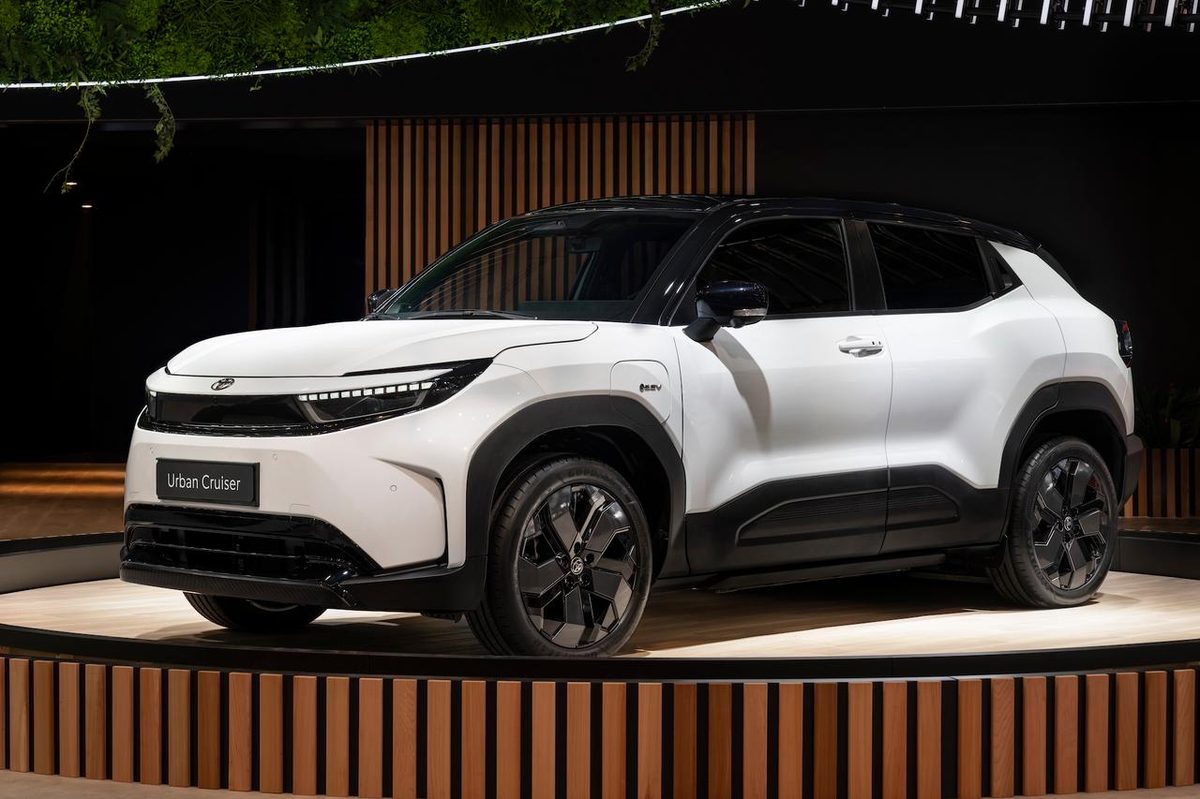
Toyota has quietly dropped another piece of the puzzle in the electric cars of the future. Forget the concept of hydrogen cars for a moment. The Japanese giant doubling down on pure battery power with the Toyota Urban Cruiser EV. It’s boxy. It’s very short. Designed for tight spaces and urban chaos.
This is more than just a re-skinned hatchback. It sits on a separate electric platform and its architecture is fundamentally different from ICE predecessors. The result is a crossover that’s planted, dense and surprisingly capable.
Why this platform change matters
At the heart of the new Urban Cruiser is a 2,700 mm wheelbase. That number may seem abstract until you realize that it offers a surprisingly roomy cabin in a footprint that’s only slightly larger than the Yaris Cross. Toyota didn’t just stretch the body. Optimized packaging.
The rear seats are not fixed. They slide.
“Sliding rear seats enable flexible cargo configurations without compromising passenger comfort.”
This is not just a gimmick. You can shift them back to extend your legs or forwards to haul gear. Modularity is gold in a city where you’re juggling groceries, gym bags and kids.
Design language: hammerhead-style front fascia
Forget your conservative grilles of old. The Urban Cruiser EV has a hammerhead-style front fascia. Aggressive, angular and undeniably modern. The design team did not shy away from sharp lines.
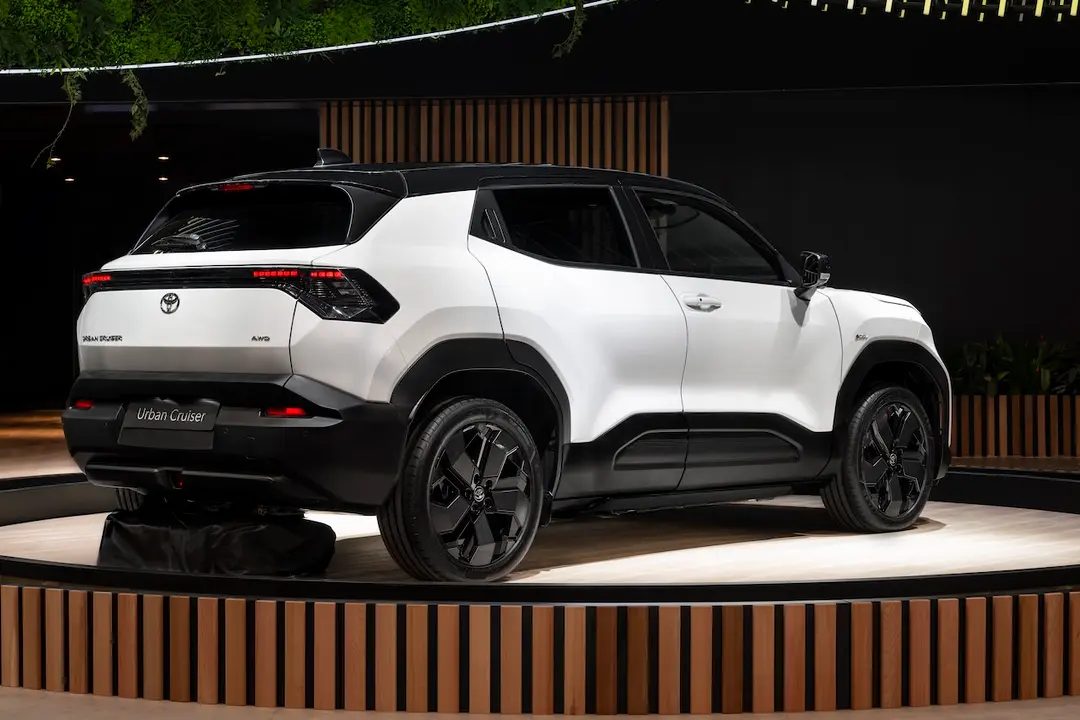
The taillights tell the same story. The full-width light bar covers the entire rear of the vehicle. This is a visual gimmick that makes the SUV appear wider and more imposing than it actually is. doesn’t scream “EV” with gimmicky blue accents, this is a statement piece that doesn’t scream “EV”. Looks like a tough little city runner.
Mobility in a Concrete Jungles
This is where the technical data is interesting. Despite the crossover, turns on a dime.
The turning radius between curbs is only 5.20 meters.
Think about it. In the densely populated city centers of Europe and Asia, the roads are narrow, parking spaces are only theoretical and small turning circles are everything. You don’t parallel park a full-size SUV. You thread the needle. The combination of short overhangs and a tight radius makes the Urban Cruiser EV one of the most agile electric crossovers currently under development.
Powertrain options: Who needs four wheels?
Toyota does not bet on one size fits all. We offer a multiple power outputs. This means you can choose based on your needs and budget.
There is also talk of a four-wheel drive version. At a time when electric car traction is the norm, the addition of all-wheel drive suggests that Toyota is planning more than sunny coastal trips. mud? snow? Rough gravel in the city? The 4WD model has you covered.
The big picture
This car is part of a wider strategy. Toyota has proven that battery electric vehicles are still the future of the mass market after introducing hydrogen powered trucks and buses. The Urban Cruiser EV fills a specific gap. It’s not a luxury item. This is not a technical demo. A practical tool in a modern style.
It’s compact enough to hide in a downtown garage.
Toyota Urban Cruiser Powertrain Specifications
Toyota offers the Urban Cruiser with several different powertrains. If you want to use electricity, there are two battery options. A smaller option is a 49 kWh unit. Technically, it’s front wheel drive. This configuration gives you 144 horsepower. The larger battery is 61 kWh. This opens up even more configuration options. Available in front or all-wheel drive.
The front-wheel drive version with a larger battery develops 174 horsepower. Choose all-wheel drive and you get 184 horsepower. Additional torque comes from the 48 kW electric motor mounted on the rear axle. This is not a hybrid system. This is a separate electrical unit.
“The AWD version develops 184 horsepower thanks to an additional 48 kW electric motor on the rear axle.”
Toyota has not yet released official range figures. This is very frustrating. But we can guess. The 61 kWh model is expected to have a range of 400 km on the WLTP cycle. Probably more. Smaller batteries clearly lag behind.
The all-wheel-drive models are not just about speed. Equipped with Hill Assist Control. This is useful if you really drive off-road. Trail and Auto modes are also available. These help control traction on slippery surfaces. It is not designed for rock crawling. However, if the weather turns bad, it’s better than a regular crossover.
Pre-orders will start soon. Delivery is scheduled for sometime in 2025. Don’t expect the small battery to compete with long-range competitors. If you want peace of mind, choose 61 kWh.