Reports are swirling that Honda is eyeing a comeback for the Accord Crosstour. Specifically, we’re looking at a lifted Accord hatchback powered by a hybrid system, slated for a 2029 release. It would sit in the crosshairs of the Subaru Outback and the Toyota Crown Signia.
The timing? It’s a toss-up. Perfectly positioned, or a massive misstep. You decide.
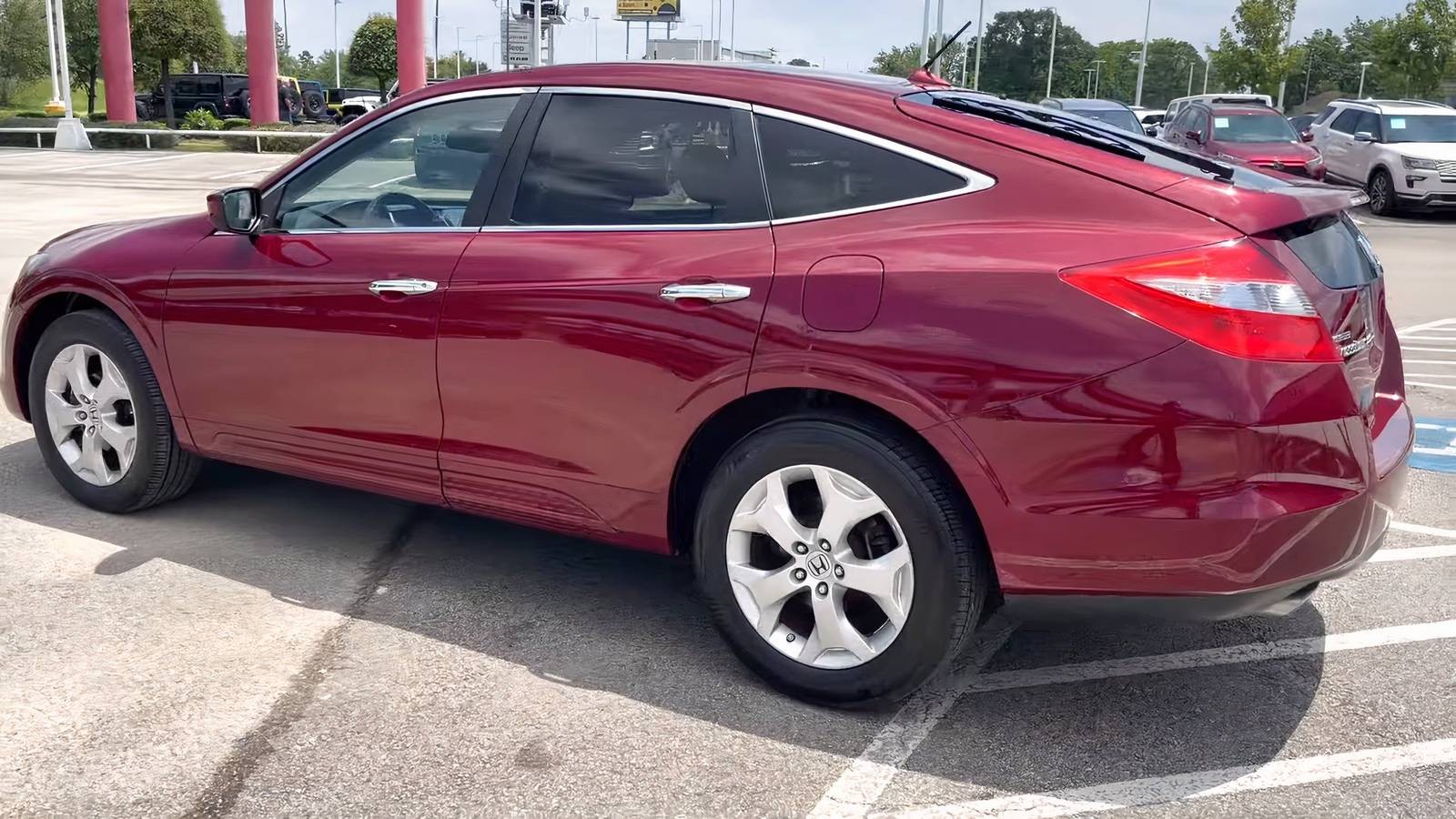
For those of you with long memories, this sounds eerily familiar. Honda tried the fastback wagon-crossover hybrid thing once. It died quietly in 2015. The big question now isn’t if they can build one. It’s whether the people who ignored the Crosstour back in 2009 are finally ready to buy one.
The Original Crosstour Was A Design Conundrum
Let’s look back. The Accord Crosstour ran for five years. It sat in a weird middle ground that satisfied nobody. It used the Accord platform but added a sloping fastback roof. This ate into rear headroom. It sat slightly higher than a sedan. It offered available all-wheel drive.
Was it a crossover? Not really. A wagon? Sort of. A hatchback? Sure. But trying to be all three meant it excelled at being nothing specific.
Under the hood, you had choices. A 2.4-liter four-banger with 192 horsepower. Or a 3.5-liter V6 making 271 hp. Both mated to a five-speed automatic. The numbers were decent for the time. The interior shared space with the Accord, so it was practical in a raw sense. But that swooping roofline? It killed easy cargo access.
Honda called it a premium lifestyle vehicle. The public didn’t buy in. Not literally. Not figuratively. The styling polarized everyone. You wanted the boxy utility of a wagon, or the upright stance of a crossover. This thing gave you neither cleanly.
Why The First Attempt Failed So Hard
Sales never took off. The Crosstour had modest peaks. Most years, it got crushed by the Accord sedan it was supposed to work with. By 2015, it was gone. No successor.
The hardware wasn’t the main issue. The concept was flawed. It suffered from a severe identity crisis.
Think about what buyers wanted. Crossover shoppers wanted ground clearance and a commanding view of the road. Sedan shoppers wanted trunk space and a clean, traditional roofline. The Crosstory offered a middle path that neither group was actively begging for. It was a solution to a problem most people didn’t have.
Then there was the timing. When it launched, crossovers were gaining momentum. Sedans still ruled. By the time it died, the crossover wave had crashed into a tidal wave. Sedans were fading. The Crosstour was squeezed between a rock and a hard place, disappearing in the noise.
Can A 2029 Hybrid Revival Succeed Where It Failed Before?
Here is the case for the comeback. Wagons have basically vanished from US lots. Fastback styling is back in vogue. There’s actual competition to target now.
The Subaru Outback and Toyota Crown Signia exist. They prove buyers are still open to car-based, slightly lifted, wagon-adjacent machines. Honda taking the Accord underpinnings, adding a hybrid drivetrain, and targeting that exact gap doesn’t sound insane anymore.
But the counter-argument is brutal. People love the Outback because it looks like a wagon and drives like a car. The Crosstour’s fastback design compromised that balance. It never delivered the clean utility the Outback provides.
Plus, Honda would be walking into a segment where Subaru has decades of brand loyalty locked down. A 2029 lifted Accord hybrid has to be sharper than the original in every single way. Better styling clarity. Better interior packaging. Better price. If it’s not, it’ll just be another confused identity with a new badge.
The original Crosstour wasn’t bad. It was just lost. Whether Honda has figured out what went wrong is the only thing that matters. As 2029 creeps closer, we’ll see if they fixed it. Or if they just made the same mistake with a plug-in.