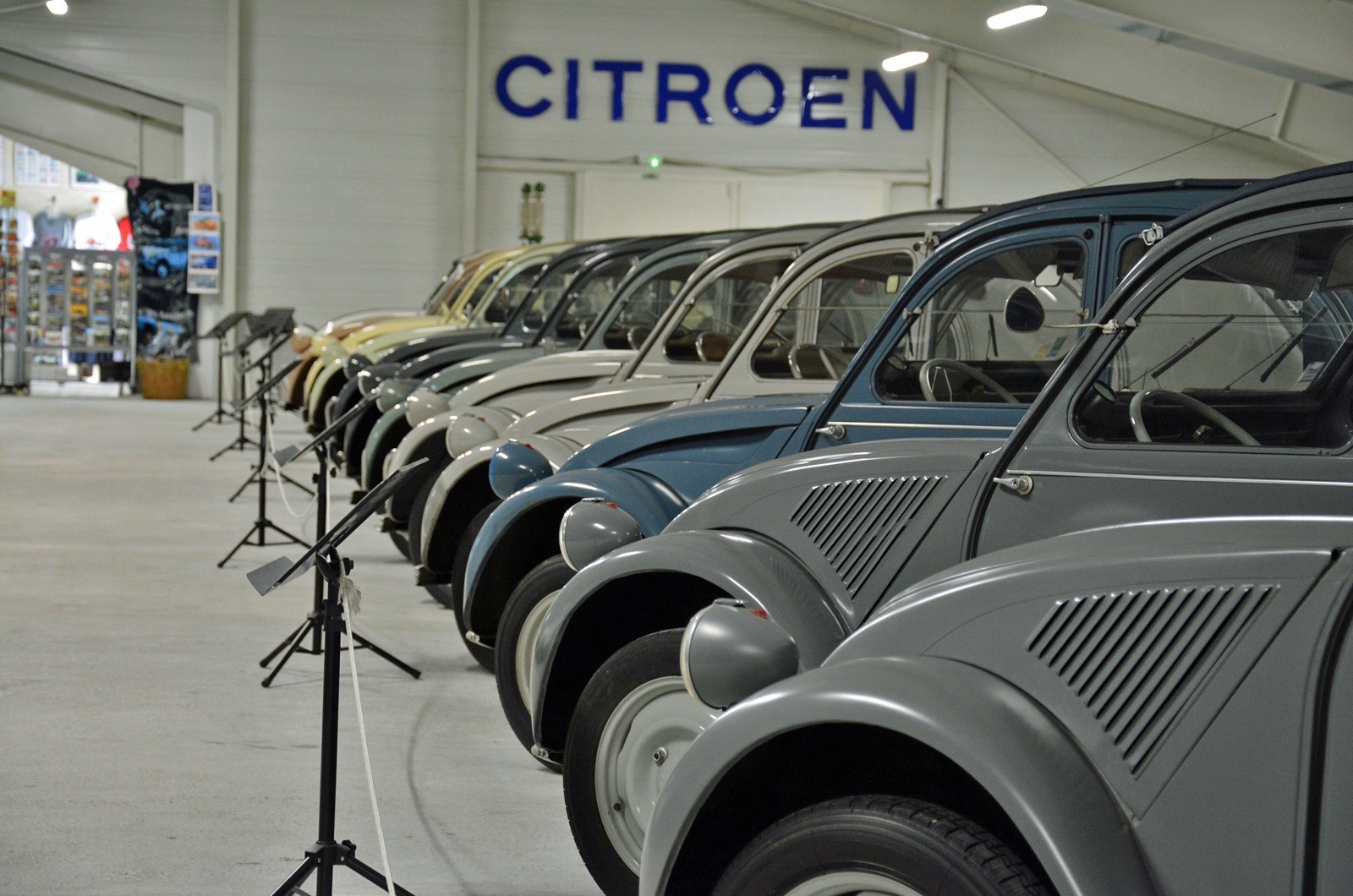
Most car collections fade away. They get broken up, sold for parts, or rot in garages. Henri Fradet is doing the opposite.
He didn’t just buy cars. He spent 40 years hunting them down. The result? 120 Citroëns.
The collection lives in the CitroMuseum in Castellane, southern France. It isn’t the official company museum in Paris. In fact, Fradet’s personal archive might be more interesting than the corporate one. These aren’t shiny showpieces. They are low-mileage survivors. He prefers cars that have never been restored. Just clean, original, and ready to roll.
To understand this collection, you need to know how Fradet thinks. He travels all over France. He tracks down the best examples. He doesn’t care about perfection. He cares about history.
Three Chambers of Automotive History
The museum isn’t a big empty warehouse. Fradet built three distinct sections. This isn’t random parking. It’s curated chaos.
The first room focuses on the heavy hitters. You’ll find Traction Avants here. You’ll also find DS and ID models. These are the cars that changed French engineering forever.
The second section belongs to the little one. The 2CV. And its many derivatives. If you like quirky, utilitarian French transport, this is where you live.
The third wing is newer. It houses cars from the 1970s to the 1990s. This is the era after the glory days. The era where Citroën started experimenting. Sometimes wildly. Sometimes boringly.
But the cars aren’t the only things here. Fradet collects memorabilia. Original R&D documents. Vintage dealer signs. Scale model cars. It adds texture to the experience. It reminds you that these weren’t just manufactured objects. They were designed by real people with real problems.
The Survivor: 1952 Traction 15/6
The Traction Avant launched in 1934. That’s pre-war. So why is it in a post-war museum?
Simple. Production didn’t stop in 1945. The last Traction Avant rolled off the line in 1957. That long tail saves it.
This specific 1952 example is fascinating. It’s powered by a 2.9-liter inline-six. It makes 77 horsepower. Not fast by today’s standards. But fast enough. And relevant.
Since leaving the factory, it has covered roughly 40,000 kilometers. That’s about 25,000 miles. Very low. The original owner kept it indoors. Always.
A collector bought it in 1973. He cherished it. Then, in 2016, it joined Fradet’s collection. It sits here today. Quiet. Untouched.
“The Traction Avant’s unusually long production run makes it a bridge between two eras.”
The Oldest Living DS
The CitroMuseum has several DS models. This 1955 black DS is different. It is the oldest surviving mass-produced DS.
Chassis number 32.
It was the 14th DS ever sold. The first 13? Gone. Probably destroyed long before they became collector items. This car is an anomaly.
Citroën didn’t start mass production until February 1956. Before that? Hand-built cars. This one was built by hand. Delivered to a dealership in Valence. Used as a demonstrator.
Logic dictates it should have been returned to headquarters. The dealer didn’t do that. He sold it to a loyal customer instead.
It changed hands a few times. Covered about 69,00 kilometers (43,000 miles). Spent 13 years in a museum in Holland. Then came to Castellane in 2004. It’s not pristine. It’s real.
The Road Trip Mechanic: 1963 ID 19
The ID 19 was the budget option. A basic alternative to the luxury DS 19. This 1963 model is painted Bleu de Provence. An unusual blue. Very fitting for southern France.
It has 27,000 kilometers on the clock. Fradet bought it from the second original owner.
Here is the story. He was living in Norway at the time. He bought the car in Belgium. He decided to drive it home.
But it didn’t start immediately. He pulled over on a Belgian road. Took apart the hydraulic system. Removed the high-pressure pump. Fixed a stuck valve. Drove it all the way to Norway.
That is the kind of hands-on knowledge you can’t teach in a factory manual. It’s street smarts. And mechanical intuition.
The Cabriolet That Almost Was
The DS 21 Cabriolet from 1966 sits in the collection too. It’s a rare breed. Citroën wasn’t big on convertibles. When they did them, they were often aftermarket add-ons. Or limited runs.
This car represents the tail end of an era. The transition to plastic. The shift in French tastes. It’s beautiful. But it’s also a footnote.
Most people think of Citroën as the brand that invented hydropneumatic suspension. Or the one that made the bubble car. Or the van with the engine in the back. They don’t always see the depth.
Fradet does.
He sees the 120 variations. The subtle differences. The stories behind every VIN number. The CitroMuseum isn’t a mausoleum. It’s a living archive. And it’s in Castellane. Where the roads twist through the Alps. And the cars still smell like 1950s leather.
You could