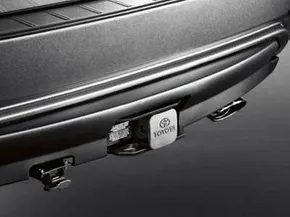
Let’s be honest. You wouldn’t show up to a dinner date in grease-stained work pants. So why leave that ugly ball mount dangling off the back of your car when you’re just going to grab tacos?
Towing gear is essential when you’re hauling a boat or a trailer. It’s mandatory. But once you’re parked, that clunky hardware looks out of place. Some trucks come with permanent hitches. Most don’t. That leaves you with a hollow drawbar receiving tube sticking out of your bumper. It looks bad. It also collects dead leaves, mud, and rust.
A hitch cover fixes this.
It plugs the hole. It hides the metal. It keeps debris out so you don’t have to shovel wet leaves out of your hitch receiver before towing next season. Plus, it stops people from wondering if a raccoon is sleeping in there.
Beyond aesthetics, a cover protects your bumper. A bare metal receiver is hard and sharp. A cover adds a cushion. It reduces scrapes if you back up too close to a wall or another car. It’s a small upgrade with actual utility.
The problem? The market is flooded with choices. You can buy something invisible and boring. Or you can buy a cover that screams for attention.
Here is how to navigate the options without wasting money.
Why You Actually Need a Hitch Cover
It’s not just about looks.
Think of the hitch tube as an open pipe. Rain goes in. Snow goes in. That slushy mix sits at the bottom. Rust starts. When you finally need to tow, you jam a heavy drawbar into a rusted, clogged tube. It sticks. You bang it with a hammer. Nobody wants that.
A simple cap keeps the elements out.
“Hitch covers provide a cushioned and highly visible alternative to a rough metal protrusion.”
This matters in tight parking spots. A bare receiver edge can chip paint. A plastic or rubber cover absorbs minor impacts. It’s insurance against dings.
Types of Hitch Covers Available
Manufacturers split these into a few clear categories. Your choice depends on whether you care about stealth or style.
- Functional Caps : These are usually black plastic or metal. They blend in with the bumper. They do one job: plug the hole. They are cheap. They are effective.
- License Plate Hangers : These attach to the cover and hold your plate. Useful if your bumper lacks a mounting spot. It keeps the plate centered.
- Novelty Covers : This is where it gets wild. Faces. Logos. Jokes. Some are funny. Most are tacky. They serve the same function as the black cap, but they tell people who you are. Or at least what you think is funny.
- Integrated Bumper Covers : Some fit flush with the bumper texture. They look factory-installed. You barely notice them.
Which one do you need?
If you tow often, pick the functional cap. It’s easier to remove quickly. If you never tow, pick whatever makes you smile. Or pick the one that matches your paint.
The decision isn’t hard. It’s just a matter of taste.
What’s your priority? Hiding the hitch? Showing off?
Why hitch covers are the new bumper stickers
Bumper stickers are dead. Or at least, they’re boring.
If you want to project personality in bumper-to-bumper traffic, the rear window is too high up. The bumper is too small. The real estate? It’s the receiver tube.
Hitch covers have moved from utilitarian caps to primary branding zones. They sit right there on the back of your rig. Prime real estate for free speech. Or bad taste. Depending on how you look at it.
The basic job is simple. Cap the drawbar receiving tube. Keep the dirt out. Keep the rust in. But the execution varies wildly.
You’ve got the cheap clip-ons. Plastic caps that hinge open or flop around when you slide a ball mount in. Then you’ve got the inserts. These lock into the tube itself. Solid. Secure. And they give designers a canvas to work with.
Love sports? There’s a logo for that. Patriotic? Flag designs exist. Weird? Absolutely.
The market has covered everything from spinning boat propellers to plastic human hands.
Yeah. You read that right.
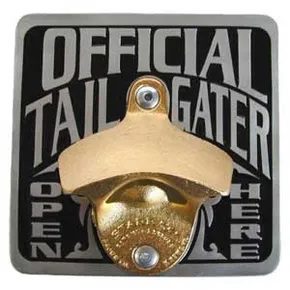
There are covers with built-in bottle openers. Lockable storage drawers like the HitchSafe for stowing valuables. Even electrified options that plug into your vehicle’s power, lighting up glowing skulls or flashing logos. It’s the same energy as a bumper sticker, just with more physical presence. And sometimes, less dignity.
How to find the right hitch cover size
All that flash means nothing if it doesn’t fit.
Trailer hitches aren’t universal. They come in classes. Specifically, Classes I through V. The difference isn’t just weight capacity. It’s the physical dimension of the receiver tube.
Measure this before you buy. Seriously.
Classes I and II use a 1.25-inch (3.18 cm) tube.
Classes IV and V jump up to 2.5-inch (6.4 cm) tubes.
But here’s the catch. Class III is the king. The most common setup on the road uses a 2-inch (5 cm) tube. If you’re guessing, guess Class III. But don’t guess. Measure.
Some covers cost up to $200. That’s not a price to pay for a mismatch.
Most manufacturers know this. They often include alternate mounts or adapters to bridge the gap between sizes. Check the product details. Look for “universal fit” claims with skepticism. Verify the tube diameter.
Installing hitch covers
So you bought it. It fits. Now what?
Installation is rarely a black art. It usually comes down to one of two methods.
The first is the insert style. You slide the cover into the receiver tube. It locks in place, often with a pin or a twist mechanism. Simple. Direct.
The second is the clip-on style. These latch onto the outside of the receiver or the bumper fascia. Easier to swap out. Harder to secure against theft or wind.
Read the manual. Not because it’s fun. Because every design has a specific retention method. Miss a step, and you’ll be chasing your hitch cover down the highway.
Once it’s on, you’re done. Until you need to tow something. Then you take it off. Or hinge it away.
The cycle repeats.
DIY Installation: Why You’re Still Doing It Yourself
Let’s be real. Tiny robots that latch a pewter bulldog head onto your receiver tube aren’t coming anytime soon. You’re going to have to suck it up and install the thing yourself. The good news? It’s one of the easiest projects you’ll tackle in your life.
For the basic plastic models, you just clip them on. Done. Other designs are a bit more involved. You’ll need to attach the decorative cover to the mounting piece that slides into the drawbar receiving tube. Usually, a simple Phillips head screwdriver is all you need. No torque wrench required. No specialized tools. Just slide that mounting piece into the receiver. Line up the side hitch pin holes in the receiver with the holes on the mounting piece. Slide a hitch pin through until it locks. You’re set.
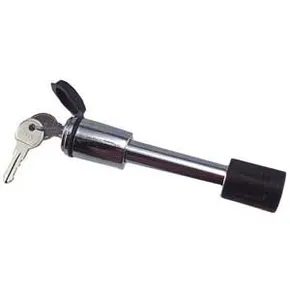
Worried about someone stealing your new accessory? Swap the standard pin for a hitch lock. It works the same way but requires a key to remove. Basic security for a basic problem.
Timing matters. Do this in dry conditions. Water trapped between metal parts in the receiving tube is a recipe for rust. Also, keep an eye on the temperature. Plastic shrinks and expands. If it’s freezing outside, that snap-fit might be stubborn. If it’s boiling, it might be too loose. Check the manufacturer’s recommended temperature range for installation.
Once that hitch lock or pin is seated, you’re ready to drive. Or at least ready to drive until you actually need to tow something.
Covering the Ball Mount
Some trucks come with permanent towing ball mounts. Others just leave them installed because hauling is a lifestyle, not a weekend hobby. If the ball stays out, cover it.
Plastic ball covers exist for this exact purpose. The designs vary wildly. You can get a simple soft cap that looks like nothing. Or you can go full spectacle. Sports balls. Animal heads. Light-up animatronic creatures. It’s your truck. Your choice.
More On Towing Mechanics
If you’re serious about what happens behind the bumper, look into these topics:
- How Loading and Unloading Towed Vehicles Works
- How Backing Up Towed Vehicles Works
- How Boat Towing Safety Works
- How Launching a Boat Works
- How Drawbar Pull Works
- How to Brake While Towing
- How to Shift While Towing
- How to Turn While Towing
- How to Pass While Towing
Where To Find Gear
- One source for hitch covers: Amazon.com
- HitchCovers.net
Sources
- Butler, Peter. “Installing a Trailer Hitch Cover.” ArticleCity.com. Nov. 20, 2006.
- Chiu, Donald W. “US Patent 5407219 – Trailer hitch ball cover with integral trailer wiring connector.” Patent Storm. April 18, 1995.
- Morgan, Elizabeth. “A Guide To Trailer Hitch Covers.” EzineArticles.com. Sept. 8, 2005.
- The Hitch Corner.
- Young, David A. and Kenneth E. Bol II. “Towing hitch cover.” Free Patents Online. Aug. 1, 1989.