


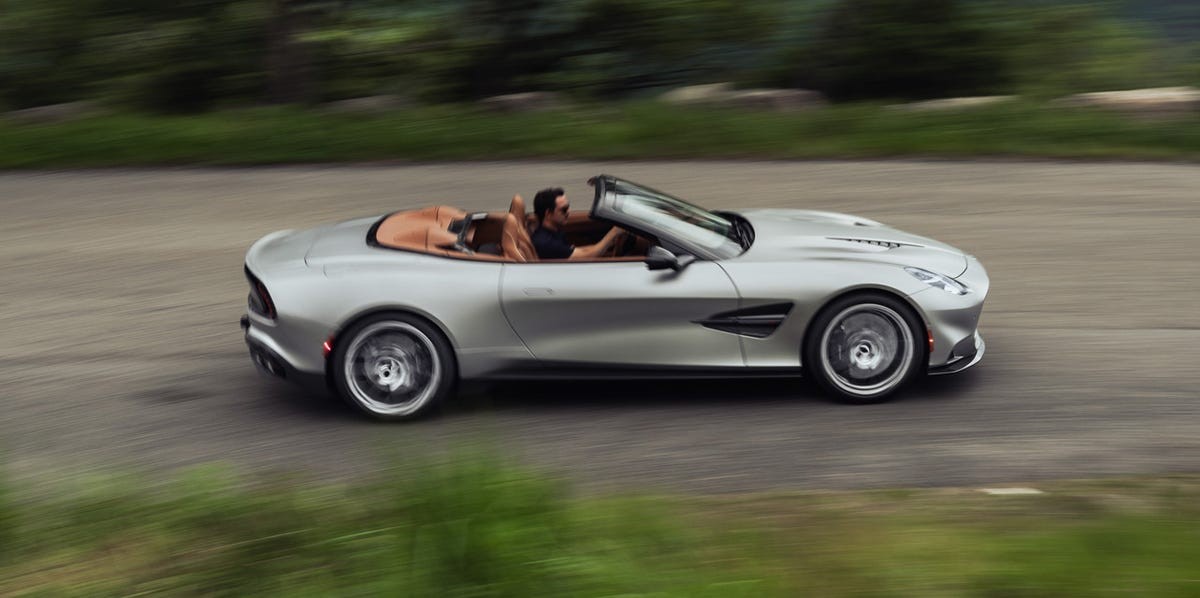
The DB12 is gone. Not broken, just finished.
Aston Martin’s CEO, Adrian Hallmark, sat down with Auto Express to talk about what comes next, and the answer is a complete rebuild from the ground up. No tweaks. No patch jobs. Just a clean sheet of paper.
One Line, Many Bodies
Here’s the twist. The new platform isn’t just for cars or just for SUVs. It does both.
Hallmark told reporters the modular architecture will allow Aston Martin to build its SUVs and its sports cars on the exact same line. It sounds like basic logistics, but that’s the point. More shared parts. Less complexity. Lower costs.
And it’s electric-ready. Pure EVs are on the board for the 2030s. The brand is prepping for it, even if the cars won’t show up for a few years.
But here is what they aren’t doing.
Plug-in hybrids? Nope. Aston Martin has decided they aren’t worth the bother. Hallmark called it “pragmatism,” which is a nice word for “we saw the data.”
The EU recently slashed emissions credits for PHEVs. Why? Because real-world driving data shows most people don’t plug their cars in. So you get a heavy, expensive car that burns gas anyway.
“We’re not delusional,” Hallmark said.
Instead of a full plug-in, expect a 48-volt system. It’s lighter. Cheaper. It adds a tiny bit of power and shaves a bit off the fuel bill. A nudge, not a shove.
The V-12 Lives… For Now
The V-12 engine hasn’t died either. Aston has managed to keep it legally alive.
They did the engineering homework to make sure the engine complies with both US and European regulations. There’s a catch, obviously. It’s not free to make as many as you want.
“If we keep our V-12.sales under 1000.per.year,” Hallmark explained.
Hit that cap and they are exempt from strict new car sales legislation until at least 2035. It’s a narrow path, but it keeps the flagships rolling. The Vanquish. The Valour. The Valiant. These twelve-cylinder giants can still legally hit the roads.
“We’ve done some work to make the v-12 compliant.”
Stiff, Light, and Steering Back
The engineering focus has shifted toward rigidity. Hallmark said the new structure boosts torsional stiffness. That means the chassis is stiffer, which usually means better handling. The weight penalty? Only slight.
Suspension mounting points are getting harder to deflect, which should tighten up the driving dynamics. Rear-wheel steering is coming to the GT models to help with turn-in. It’s all about making the big cars feel smaller, faster.
So there we have it. The DB12 closes the door. A new platform opens a different one.
No plug-ins. Few V-12s. One line doing all the heavy lifting.
Will the electric models arrive on schedule? Probably. But for now, Aston Martin is still a car company first, trying to sell dreams that smell like gasoline before the law catches up.
What happens when the ban finally drops? We’ll wait and see. 🚗


