You can delete the apps. You can throw your smartphone into the lake. Civilization moves fast, but the urge to unplug? That’s constant. We crave the raw simplicity of the outdoors. The crackle of a fire. The smell of pine. The silence that isn’t silent at all.
But let’s be honest. We aren’t ready to live in a cave. We want the woods, not the dysentery. We want nature, not the lack of a flushing toilet. This is where the travel trailer steps in. It’s the bridge. It’s the compromise between primal instinct and modern comfort. You pack up the essentials of civilization and tow them into the wild.
The catch? Towing isn’t just driving. It’s a different beast. A heavy trailer changes the physics of your vehicle. It affects turning radius. It increases stopping distance. It demands a new set of reflexes. You need to know how to hitch properly. You need to understand weight distribution.
If you’re looking to buy, the market is saturated. There are options for every budget and every definition of “comfort.” Do you want canvas walls and fresh air? Or do you want fiberglass insulation and climate control? Do you shower every night, or are you okay with the “outdoorsy” scent?
Before you worry about the towing mechanics, you need to pick your weapon. The terminology alone can be a headache. Bumper pull. Fifth wheel. Toy hauler. Let’s break down the types.
The Standard Bumper Pull
This is what you picture. The hitch is at the front, attached to the rear bumper or frame of your tow vehicle. Simple. Common.
- Pros: Easier to maneuver in tight spaces compared to larger rigs. Lower cost entry point.
- Cons: Can sway if not loaded correctly. Less stable than fifth wheels.
The Fifth Wheel
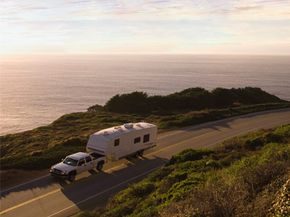
Look under the bed of a pickup truck. You’ll see a large, heavy hitch plate in the bed itself. That’s the fifth wheel. The tongue extends over the truck’s rear wheels.
- Pros: Better weight distribution. More stable. Usually offers more interior living space for the length.
- Cons: Requires a pickup truck. Harder to reverse. More expensive.
The Teardrop
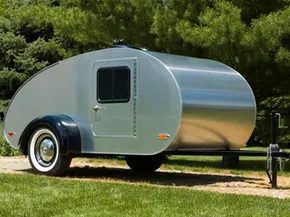
Tiny. Lightweight. Stylish. These are minimal camping pods. You sleep in them. You might have a small kitchen in the rear. You don’t have much standing room.
- Pros: Can be towed by almost any car. Easy to store. Cheap.
- Cons: Zero privacy if you want to stand up. Limited storage. Basic amenities.
The Travel Trailer with Slide-Outs
These are full-sized homes on wheels. They feature expandable sections that slide out to create more interior space.
- Pros: Maximum comfort. Home-like feel.
- Cons: Heavy. Requires a powerful tow vehicle. Complex setup at camp.
The Toy Hauler
Built for adventure. These trailers have a garage area in the back. You can park a motorcycle, ATV, or kayak inside.
- Pros: Dual purpose: living space and storage.
- Cons: Expensive. Heavy. Complex
You don’t just buy any RV. The first unit you spot isn’t the right one. New buyers often miss the sheer variety. You want a quick sale. You don’t. You don’t want to watch other travelers on the highway towing something better.
Budget matters. Needs matter more. A big family needs space. A spouse who hates camping without a hot shower needs plumbing. You have to look at your tow vehicle. Overloading it is dangerous. It ruins the suspension. It kills the engine.
Here are the main types.
Conventional Travel Trailers
These are the heavy hitters. They look like small houses on wheels. You get a separate bathroom. A real shower. A kitchen with cabinets. Sleeping areas that don’t fold into the floor. They are comfortable. They are expensive. They require a serious tow vehicle.
Pop-Up Trailers
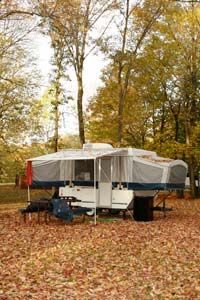
They are a hybrid. Part tent. Part trailer. Compact when closed. Huge when open. You crank a handle. Or use a hydraulic lift. The sides extend. The walls are canvas. Flexible. Breathable.
Fewer amenities. No full bathroom usually. No hard walls. But they are lightweight. They are inexpensive. Visibility while driving is better. You can see out the front. You aren’t staring at the back of a 25-foot box.
Fifth Wheel Trailers
If you need more space but hate the sway of a bumper pull, look here. They connect to a hitch in the bed of a pickup truck. The front overhangs the cab. This gives you more living space inside. The center of gravity is lower. Stability is higher.
You need a dually pickup truck usually. Or at least a heavy-duty one. They are pricey. But they feel solid. Less bouncing. Less swaying in crosswinds.
Toy Haulers
Built for gear. ATVs. Dirt bikes. Motorcycles. The rear wall drops down. It becomes a ramp. Loading is easy. Unloading is faster. The interior has living space. Kitchen. Bed. Bathroom. But the floor is reinforced. Walls are padded.
You pay for the utility. You don’t care about luxury linens. You care about keeping your toys safe. And having a place to sleep after a day on the trails.
Travel Trailer Types Comparison
Which one fits your life?
- Budget: Pop-up. Cheap. Simple.
- Comfort: Conventional. Full amenities.
- Stability: Fifth wheel. Low center of gravity.
- Adventure: Toy hauler. Carry the toys. Sleep next to them.
Don’t rush. Test drive the tow vehicle. Load it up. See how it handles. You will learn quickly.
Teardrop trailers had their moment in the 1940s and now they are back, driven by people who want to strip down their travel style. These retro units are tiny compared to standard travel trailers. You get a galley and a queen-sized bed crammed into a footprint that barely qualifies as a room. The trade-off is worth it for most enthusiasts. You get a lighter rig that burns less fuel and sets up in seconds. You do not need a heavy-duty pickup to pull one. That is a huge advantage over the next type on our list.
Fifth-Wheel Trailer Advantages and Disadvantages
You can spot a fifth-wheel trailer or 5er instantly. It does not hitch to your bumper. It extends over the truck bed and locks into a specialized mount. Serious RVers love these rigs. They are bigger and cost more than standard travel trailers. They also demand serious horsepower. Your gas mileage will suffer. The load distribution is better though. The ride is smoother because the weight sits differently.
Storage, Telescoping, and Toy Hauler Options
Storage trailers belong in a different category. They are built to move gear, not people. Other niche options include lightweight trailers with aluminum frames. Telescoping trailers have hard sides that expand for more space. Toy haulers combine storage with living quarters. They are popular for carrying dirt bikes or kayaks.
Once you pick your rig, you have to learn how to tow it safely. The next section covers the specific techniques that matter.
Travel Trailer Towing Tips
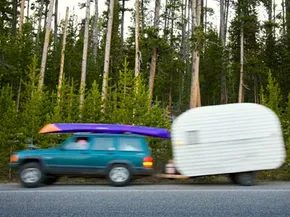
Towing a travel trailer is a skill that feels like you are learning to drive all over again. It is not just about having enough torque; it is about managing momentum and understanding physics. Before you hit the highway, you need to get comfortable with the rig. Practice in an empty parking lot. You will thank yourself later when a simple parking maneuver doesn’t feel like a life-or-death situation.
Here is how to handle the basics without losing your cool.
How to Hitch a Travel Trailer
Let’s start with the connection. This part applies to traditional travel trailers, not fifth wheels.
First, check the hitch label. Make sure it can handle the Gross Trailer Weight (GTW). If the weight exceeds the hitch class, you need a higher rating. Do not skip this step.
- Raise the trailer with a jack.
- Drive your vehicle in reverse.
- Center the hitch ball under the coupler.
Line it up. Stop. Shift into park. Engage the parking brake.
Lower the trailer onto the ball until it sits flush. Lock the coupler. Plug in the electrical connector. This gives you your brake and tail lights.
Now for the safety chains. Cross them under the tongue. This creates a cradle if the coupler fails. Leave enough slack for turning, but not so much that they drag on the pavement. Dragging chains spark. Sparks near propane or tires are bad news.
Why Braking Distance Matters More When Towing
You are moving more mass. More mass means more momentum. Momentum does not stop on a dime.
When you tow, your stopping distance increases significantly. The heavier the rig, the more space you need.
“On the road, make sure you always give yourself plenty of space for braking. The faster you’re going, the more space you should allow.”
If you tailgate while towing, you are asking for a fender-bender. Increase following distance. Look further ahead. Anticipate stops earlier. Your feet will do the work, but your brain needs to plan the stop before it happens.
Managing Weight Distribution to Prevent Sway
Trailer sway is the enemy. It starts small, then grows into a death spiral. The key to stopping sway before it starts is proper loading.
Distribute weight from side to side. Do not load one side heavier than the other. Distribute weight from front to back. This affects the tongue weight.
Proper tongue weight keeps the trailer tracking straight behind your tow vehicle. If the load is too far back, the trailer becomes light on the hitch and prone to fishtailing. If it is too far forward, it overwhelms the tow vehicle’s rear axle. Balance is everything.
The Trick to Backing Up
Backing up a trailer is counterintuitive. Your instinct says turn left to go left. That is wrong.
Place your hand at the bottom of the steering wheel. Move your hand in the direction you want the trailer to go.
- Move hand clockwise? The trailer goes left.
- Move hand counter-clockwise? The trailer goes right.
It feels weird. It is weird. But it works. Once you internalize this, backing into tight spots becomes manageable.
How to Turn While Towing
Your trailer wheels cut a tighter arc than your truck’s wheels. This is why you need wide turns.
If you turn too sharply, you will hit the curb. Or worse, you will jackknife. Give yourself slack. Swing wide. Then tighten the turn at the last moment.
Watch your mirrors. Watch the trailer angle. If the trailer starts to angle in too quickly, straighten out. You can always correct course. You cannot un-hits a curb.
Parking With Assistance
Parking a long rig alone is possible, but having a spotter makes it easier.
If you are unsure of your dimensions, get someone outside to guide you. They can see the angles you cannot.
Once you are in position:
1. Shift to park.
2. Apply the parking brake.
3. Release the foot brake.
Then, have your spotter place wheel chocks behind the tires. This prevents any rolling. It is a simple step that adds security.
If you follow these steps, your trip will be smoother. Towing is a learned behavior. It takes practice. Keep practicing.