The Lancia Thesis is a ghost. Not because it haunts anything, but because it barely existed. Few cars from Lancia ever received this level of investment. It sat on a bespoke chassis. It shared suspension geometry with Maseratis. It had radar. It still died.
We are talking about a car built to fight the BMW 5 Series and the Mercedes E-Class. It launched in 2001. It vanished by 2009. Less than 20,000 units rolled off the line. It never reached UK shelves. Even in Italy, you will struggle to spot one.
So why did it fail? And why does it look like a medieval knight got into a fight with a limousine?
Lancia Thesis Design Flaws
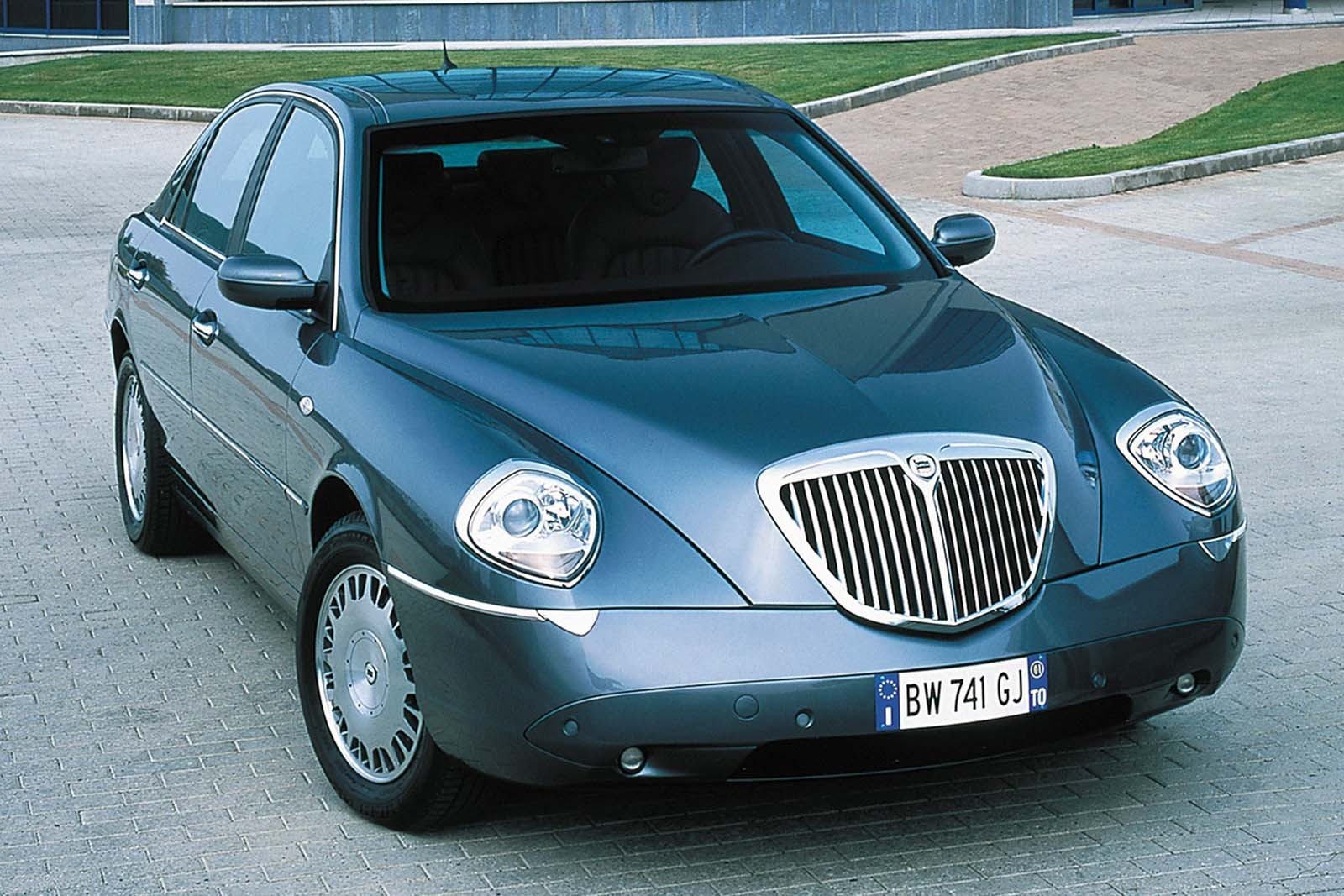
Let’s talk about the looks. The front end wears a chrome grille that screams medieval shield. It’s aggressive. Gothic, almost. The rear lights glow with a translucent mystery you won’t find on any other executive sedan.
“From the front, the Thesis resembles a medieval shield; from the rear, a gothic puzzle.”
The side profile, though? Boring.
It’s a car of three parts. A dramatic nose. A dramatic tail. And in the middle? The dullest section of any executive car on the planet. It’s a piggy-in-the-middle strategy that backfired. You have a striking start and a striking finish, sandwiched by visual silence. It’s a pity.
From Dialogos Concept to Production Reality
The tragedy here isn’t just the sales figures. It’s the missed potential. The Thesis stems from the 1998 Dialogos concept. Dialogos. Pronounced ‘tay-sis’, not like a doctoral thesis.
That concept car was electric. Clean flanks. A wooden floor. Suicide rear doors that swung backward. It promised freshness. It promised something that wasn’t another German clone.
Lancia lost its nerve.
They took the subtle curviness of the Dialogos and traded it for banality. They kept the name but dumped the soul. If you are going to build a rival to the Audi A6, why play it safe? Lancia chose safety. They chose dullness over the impractical-but-beautiful wooden floors and smooth contours of the concept.
Luxury Interior vs. Fiat Chassis Issues
Inside, the Thesis tries hard. Really hard.
The cabin feels special. Spare wood veneer. Cream-faced instruments. Seats upholstered in rich materials that beg to be touched. You could even get heated and cooled massage seats in both rows. It’s a sanctuary.
But there was a problem. A big one.
By 2001, almost every Fiat Auto product suffered from a specific flaw. An inability to absorb sharp transverse ridges. Specifically, motorway expansion strips.
Hit a bump in the road and the dashboard would shake. It wasn’t just a vibration. It was a creaky judder. A faint plastic crack. The suspension, despite its Maserati DNA, failed to suppress the tremor. The interior rattled.
Why The Lancia Thesis Was Discontinued
You might think that judging a car by how it handles a road seam is arcane. Maybe. But the aura of flimsiness it created was real.
I waited years to drive one. Non-availability in the UK forced me into passenger mode initially. Then, a chance ride in Turin. Minutes in. The Thesis hit an autostrada expansion strip.
I heard the dashboard quiver. I felt the plastic crack.
The disappointment wasn’t that it bounced. It was that it rattled. In a car costing that much, with that much tech, you don’t want the interior to sound like a cheaper Fiat. You want isolation. You want silence. The Thesis gave you noise.
It’s a strange death for a car with radar-guided cruise control. A first for the brand. Advanced tech. Maserati suspension. And a dashboard that couldn’t handle the highway.
Why bother?