American roads have seen a safety uptick in recent years. Mostly for cars, though. Cyclists don’t share that good fortune.
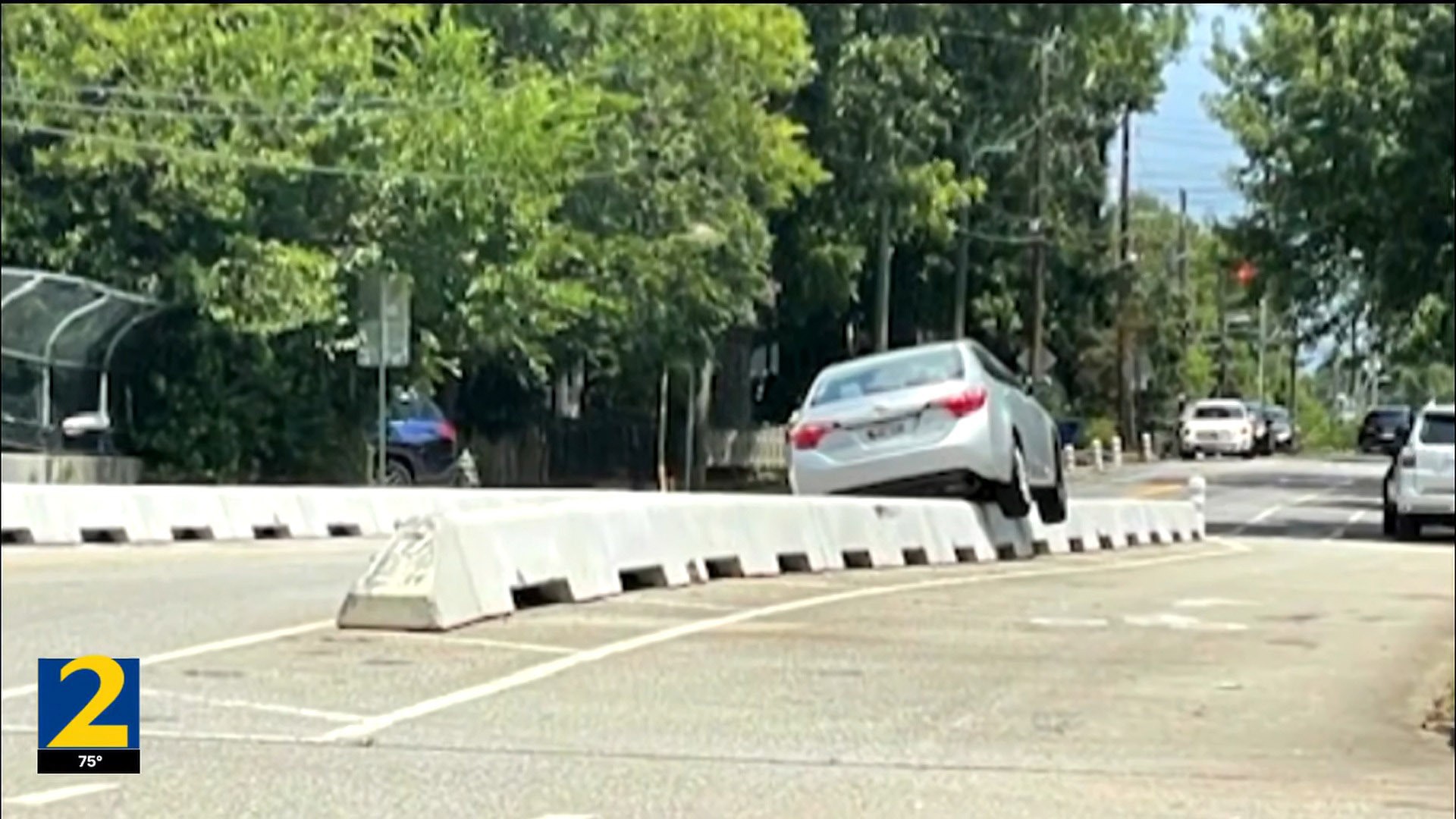
Atlanta is trying to fix the imbalance. They are installing protected bike lanes in neighborhoods like Grant Park. The plan seems sound. The execution has been… chaotic. Drivers keep slamming into the concrete separators. Just recently, a Toyota Corolla ended up high-and-dry on a barrier. Two wheels in the air. Looking less like a sedan and more like a stranded dune buggy.
Is it a design flaw? Maybe not.
Why drivers keep crashing into Cherokee Avenue bike lanes
People living along Cherokee Avenue have watched a series of weird accidents unfold. Since the protected lane went up a few months ago, cars don’t just clip the edge. They assault it.
One driver allegedly drove along the top of the concrete separator. Like a Tony Hawk trick with a four-wheel vehicle. He just kept going.
Another car flipped.
Residents complained. They said the low-profile dividers were invisible. Not that they liked the crashes, but that the barriers themselves seemed to be the hidden enemy. Local station WSB-TV picked up on the confusion. They asked the hard question: Why is nobody seeing this?
The Atlanta Department of Transportation (ATLDOT) responded fast.
- They installed reflectors.
- They added flexible bollards next to the rigid concrete.
- The engineering team is currently reviewing crash data to see if more visibility tweaks are needed.
Here is the twist, though.
ATLDOT didn’t blame the infrastructure. They pointed the finger right back at the wheel. Their analysis suggests pure driver error. No traffic law mix-up. No tricky installation. Just folks failing to notice an obvious wall in their path.
Why bike lane barriers actually work
There is a difference between a lane and a barrier.
Painted lanes rely on hope. Hope that the driver will stay in their box. Protected bike lanes assume the opposite. They assume drivers will slip up. Distracted. Tired. Daydreaming.
Designing for failure isn’t pessimism. It’s physics.
Look at the Corolla on the wall again. Yes, the car is totaled. The barrier looks wrecked too. But look closer at the geometry. The car didn’t enter the lane. It hit the wall. The wall stopped it.
A Grant Park resident put it bluntly to WSB-TV. Without that concrete teeth? “Somebody could have been killed.” The driver was right in the lane. The barrier absorbed the impact so a cyclist didn’t have to.
It feels counterintuitive. You see a mangled fender and think “bad design.” You ignore the ghost in the frame. The person who never got there.
So why do drivers miss these things?
Maybe it’s confirmation bias. We only look for what we expect to see. A smooth road. An empty lane. Not a concrete curb meant to save someone else.
The ATLDOT is adding lights. The reflectors are new. The bollards are bouncier. Drivers are still crashing.
It’s a weird dynamic. We build walls to keep people safe from cars, then act surprised when cars hit walls.
Do you think adding more reflectors changes anything? Or are we just asking drivers to pay attention in an era where looking down at a phone is the default?
The city keeps tweaking. The crashes keep happening. The cyclists keep riding.