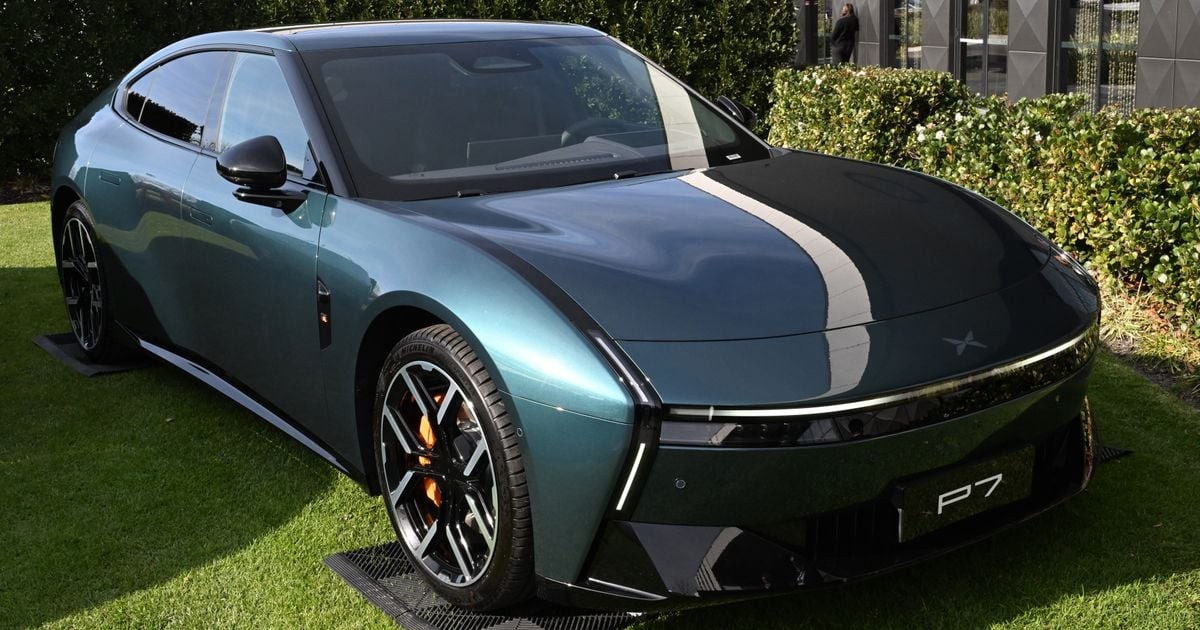
The Xpeng P7 is here. It’s in Melbourne. It’s sitting pretty next to the Model 3 and the BYD Seal. But will you actually be able to buy one down under?
Xpeng has not pulled the trigger yet.
The automaker revealed the second-generation liftback at its Australian relaunch this week. This factory-backed entry sees four SUVs and a people mover hitting showrooms in the next six months. The P7 is different. It’s the only production car shown that hasn’t been locked in. Not the Aircraft Carrier concept. Not the future flagship. Just the P7.
Why the hold-up?
Brian Gu, Xpeng’s vice chairman, told us plainly: sedans are losing ground.
“I see a trend that sedens becoming more marginalised as a format… we are thinking very hard whether we want bring more sedans to this market.”
The decision isn’t made. But the data is staring them in the face.
The EV Market Shift in Australia
Let’s look at the numbers. They don’t lie.
Tesla is selling cars again globally, but locally, it’s the SUV doing the heavy lifting. The Model Y became the first EV to top monthly sales charts in May. The Model 3? Sales are down 14.1% in the first six months of 2026. Only 3,192 units moved.
Meanwhile, the BYD Seal is bucking the trend. It’s up 64.9%. That’s 2,654 deliveries. It’s eating the Model 3’s lunch.
And then there’s the Kia EV4. A direct sedan rival. It contributed only 277 units to Kia’s total. That’s it.
Passenger cars are out. SUVs took over in 2012 (Mazda 3) and utes took over the top spot in 2016 (Toyota HiLux, then Ford Ranger). Sedans are essentially legacy formats now.
So why show the P7?
Xpeng P7 Specs vs Tesla Model 3
The P7 is striking. It’s a liftback, not a traditional trunk-sedan.
In China, it launched as the ‘E29’ generation in 2025. Here’s what you’re looking at if it makes the trip:
- Dimensions: 5,017mm long. 1,970mm wide. 1,427mm high. It’s big.
- Entry-Level Model: Rear-wheel drive. 270kW motor. 465Nm torque. 74.9kWh LFP battery.
- Range (CLTC): 702km for the entry model.
- Flagship Ultra: Dual-motor all-wheel drive. 437kW. 695Nm. 0-100km/h in 3.7 seconds.
- Long Range: A 92.2kWh battery boosts the CLTC range to 820km. The Ultra claims 750km.
Price matters. In China, the P7 and Model 3 are priced similarly. In Australia, the Tesla Model 3 starts at $54,900 plus on-roads. If Xpeng matches that, it’s competitive. But entry cost is just one factor.
The Competition is Crowded
You’re not just fighting Tesla.
Mazda is bringing the 6e electric liftback to Australia this month. Deliveries start now. Xpeng will be watching those sales numbers closely. It’s a low-volume segment, but growth is happening.
The Kia EV4 showed us where the road goes. It failed to gain traction despite record EV market shares driven by fuel prices. The sedan is hard to sell.
Xpeng also sells the M03 in China. It’s smaller, aimed at younger buyers, and cheaper. There’s also the P7+, a larger liftback with calmer styling. The base P7 sits between them—sporty, large, and risky for the Australian market.
Will It Arrive?
Xpeng is “looking at the market.”
The GX flagship SUV is coming in 2027, at the earliest. Timing is uncertain. But the P7 sits in a weird limbo. It’s a beautiful car. It’s fast. It’s efficient. But Australia buys Rangers and Hiluxes. It buys Model Ys. It buys BYD Seals if they’re cheap enough.
A sedan requires a different pitch. A different marketing spend. A belief that buyers still want a trunk.
The P7 is ready. The market is skeptical. The decision rests on whether Xpeng wants to fight an uphill battle for sedan sales or wait for the trend to reverse.
We’ll know soon. But don’t expect it in your driveway by Christmas.