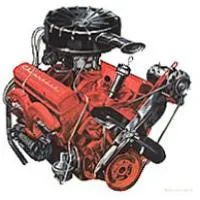
The small-block Chevy have been making history for a long time, but it wasn’t until 1957 that the engine really took off. While the 265-cubic-inch V-8 engine remained the base choice of the masses, the 283 was the focal point for anyone serious about speed. Chevy didn’t just stroke it; they bored the cylinders out bored the cylinders out to 3.88 inches, creating the legendary displacement.
In its mildest guise, the new 283 produced 185 horsepower at 4600 rpm. Boring enough? Throw in a 4-barrel carburetor and you get 220 horsepower. Installing two 4-barrels produces 245 or 270 horsepower depending on the tune. But the striking feature is the ‘ramjet’ fuel injection system. Power is increased to 250 or 283 horsepower. The 283 horsepower version was the holy grail, reaching the magical goal of one horsepower per cubic inch. It was so powerful that Chevrolet restricted it to the close-ratio three-speed manual transmission only. That power cannot be wasted on a sloppy gearbox.
283 Fuelie Engineering Reliability
High performance usually means high maintenance costs, but the composition of the “fuel” is different. From the beginning, Chevrolet has focused on reliability. If you order the fuel injected version, you get a mechanical valve lifter instead of a hydraulic one. High durability even under the stress of high rotation speeds.
Heat management was a nightmare for early direct injection systems. To solve this problem, Chevrolet used longer-reach spark plugs equipped with metal deflection shields. Keeps the intense heat radiating from the intake manifold away from the wire and plug covers. The thicker casting of the engine block itself prevents deformation of the cylinder walls, even if the mounting bolts are over-tightened during installation.
The fuel system does more than just pump gas into the engine. The fuel channel is tapered and widens as it approaches the air intake. The “Ram’s Horn” exhaust manifold is similarly designed to improve scavenging and volumetric efficiency. Better airflow means more power.
Electrical systems often fail when the first problems appear. The new Chevrolet dealer placed the break point directly above the bearing. This reduces variation in gap settings and ensures consistent ignition timing. The front and center main bearings are also 0.063 inch thicker to handle the increased stress.
The Ramjet System Explained
ラムジェット システムは 1950 年代のエンジニアリングの驚異であり、ほぼすべてがシボレーのエンジニアリング スタッフによって設計され、ハリー バーとゾーラ アークス ダントフによって生産のために合理化されました。 ゼネラルモーターズのロチェスターキャブレター部門によって製造されていましたが、その技術は独自のものでした。
これは、燃料ゲージ、マニホールド アセンブリ、エア ゲージの 3 つの主要コンポーネントで構成されます。 従来のキャブレターを完全に置き換えます。 最初に空気がシステムに入り、次に燃料が混合のために各吸気ポートに直接噴射されます。 この空燃比の正確な制御により、体積効率と燃費が向上します。
冷間始動が容易になります。 ウォームアップが早くなります。 ラムジェットシステム自体は、ツイン4気筒キャブレターエンジンと比較して約5馬力の出力増加を実現しました。 シボレーは、マニホールドのアイシング(冬季のキャブレターによくある問題)を解消し、高速コーナリング時の失速の可能性を減らすと主張している。 加速中の燃料カットオフにより、応答がフラットスポットになる問題は修正が必要なバグでした。 デイトナ スピード ウィークでは、エンジニアは燃料ノズルを気流のさらに奥まで延長しました。 これにより、熱を吸収しすぎてアイドル状態になるのを防ぎます。
Performance data that shook the industry
There has been no official word that Chevrolet will test the fuel-injected 283 in a regular sedan, but the Corvette speaks for itself. The 0-60 mph time of the most powerful version consistently averages just over 6 seconds. Top speed is around 140 miles per hour.
Motor Trend magazine’s Walt Woron tested a 250 horsepower FI Corvette (33 horsepower less than the top 283 version). He did 0-60 in just 7.2 seconds. That may sound slow by today’s standards, but remember the tire technology of the time.
Wallon then got a special 283 with a 10.5:1 compression ratio, dual exhaust, special camshaft and heavy lifters. The car reached 134 miles per hour. He told himself that even at this speed the car wasn’t really growing. I want more of it.
Extrapolating from those results, the two-door sedan, which weighs 400 pounds more than the Corvette, could go from 0-60 in about 8 seconds and hit a top speed of 190 mph in the right gear. The 283 Fuelie is more than just a factory engine. This is a racing engine that you can drive to the store.
Why is 283 Fuelie important today?
The 283-cid V-8 reached its second major level of development in 1957. Until then, the little cylinder is steady. Since then, it has become a legend. Fuel injection systems are complex. It’s wrong. It requires careful planning to make it work. But when it does, it delivers performance that more than rivals foreign exotics. It surpasses them.
The two-piece aluminum manifold casting used in the fuel-injected 283 has become an important icon among collectors. The upper casting contains the air channels and the base of the dosing system, while the lower casting forms the stamped tube. It covers the middle part of the top of the engine. It can still be seen in renovation projects.
“fuelie” is the ultimate expression of small area potential. 1 Horsepower per cubic metre. Very few engines can do this. Chevrolet made this in 1957. Uses a manual transmission. Equipped with a mechanical lift. and